Members' interviews
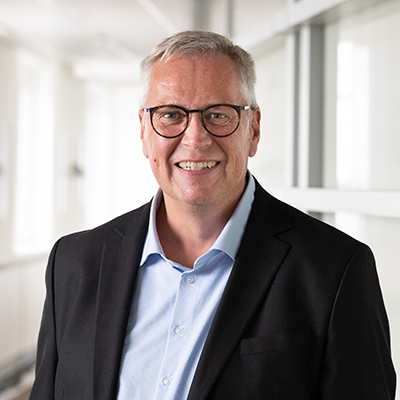
Interview with Tommy Rahbek Nielsen, Flender
18 November 2026
Can you tell our readers a little about your organisation (e.g. your history in Europe, countries of activity, key projects, partnerships, etc.)?
Winergy is the brand for drive system solutions in the wind industry within the Flender GmbH corporate
structure, headquartered in Voerde, Germany. We are a drivetrain specialist for the wind sector, with roots in
Europe dating back to the early 1980s, when Winergy drives were installed in some of the very first wind
turbines on the continent. As Flender we even have more than 125 years of experience with gearboxes.
Since those pioneering years, our track record has grown to more than 400 GW of installed gearbox, coupling
and generator capacity worldwide, giving us one of the largest and most proven experience bases in the
industry. Under one roof, we combine expertise for the entire drivetrain – from gearboxes and generators to
direct drive segments, couplings, multibrand drivetrain service and digital solutions. We focus on
high-performance gearboxes, couplings and generators for both onshore and offshore applications, supporting a broad range of turbine platforms deployed across Europe and globally.
Today, we are a major player in the European as well as the global wind market, working with all major
turbine OEMs in Europe and worldwide. Beyond manufacturing, we are also active internationally through our
global service team across all key wind regions. We work closely with major turbine OEMs, including
long-standing partnerships built over decades of collaborative product development and field support. Our
outstanding engineering capabilities across the entire drivetrain – generators, gearboxes and couplings – are
a core differentiator and enable us to contribute meaningfully to the performance and reliability of Europe’s
wind fleet.
What are the most exciting developments you have seen in the wind industry?
One of the most exciting developments has been the transformation of wind power from a niche, sustainability-focused energy source into a central pillar of the European energy system. Getting wind firmly onto the overall energy supply agenda – not just as a “green” option, but as a strategic component of Europe’s energy mix – has been a real highlight and has helped put wind at the top of the energy policy agenda.
We have also seen how innovation, dedication and passion within the industry have enabled wind to evolve from being mainly Europe-based to becoming a globally acknowledged energy source. This journey has been driven by continuous technological progress, industrial commitment and the strong policy frameworks established in Europe.
Another key development is the broader recognition of the role of wind energy: not only as a driver of sustainability and decarbonization, but also as a contributor to energy security, competitiveness, resilience and speed in establishing new generation capacity. The ability of wind projects to be deployed at scale and relatively quickly has become a crucial asset for Europe as it navigates the twin challenges of climate action and energy independence.
What changes would you like to see in the sector?
Europe can only achieve lasting energy security by working together. As an industry, we already have the technologies needed. What is missing is greater speed in permitting, grid expansion and investment decisions. Accelerating these processes is essential if Europe is to fully harness its wind potential and meet its climate and energy security objectives.
At the same time, our supply chains are global, but a portion of the value creation must remain in Europe. Once industrial and engineering expertise is lost, it is very difficult to rebuild. If we act now, Europe’s electricity supply can remain secure and affordable, while sustaining high-value jobs and know-how in the region.
It is of utmost importance that we continue to work towards closer collaboration and more sharing among all players in the value chain. By working more closely together – OEMs, component suppliers, service providers, policymakers and research institutions – we can unlock substantial optimisations, drive innovation and support technological evolution. In certain areas, this collaboration may even lead to genuine revolutions in new technologies, reinforcing Europe’s leadership position in wind energy.
What role do you see your organisation playing in the future development of
wind energy?
Our ambition is to be the partner of choice as a supplier of wind powertrains – including gearboxes, generators and comprehensive service solutions – in the European and global wind markets. We aim to lead in drivetrain technology, from advanced gearbox and generator concepts to integrated service offerings, backed by system expertise across the entire wind drivetrain.
By combining our strong engineering capabilities with global manufacturing and service footprints, we want to help secure the long-term availability of critical components and make the wind supply chain more resilient, particularly in Europe. This includes not only delivering robust hardware, but also ensuring that maintenance, upgrades and digital solutions are available throughout the lifecycle of a turbine.
We also strive for continuous improvement and for increasing capabilities across the full value chain linked to our products – from design and manufacturing to operation and service. In doing so, we aim to support Europe in scaling up wind energy while maintaining high performance, reliability and cost efficiency.
How has WindEurope membership benefited your organisation?
WindEurope provides us with a strong platform to stay close to policy developments and market trends across Europe. Through the association, we can follow and contribute to discussions that shape the regulatory and market environment in which the wind sector operates.
Being part of WindEurope also allows us to bring the voice of component suppliers and the wider supply chain into broader industry debates. This is crucial for ensuring that the specific needs and perspectives of drivetrain and component manufacturers are considered in policy and industrial strategy decisions.
Through WindEurope, we can engage directly in important discussions on regulations and European industrial strategy. The network helps us connect with customers, partners and policymakers, fostering the relationships needed to develop and deploy new solutions.
Events, conferences and working groups organized by WindEurope provide valuable insights that feed directly into our product and technology roadmap as well as our corporate strategy. They also create opportunities to collaborate with universities and other key stakeholders in the industry, which is essential for driving innovation and maintaining Europe’s technological leadership in wind energy.
Looking ahead 10 years, what do you hope to have achieved?
Looking ten years ahead, our goal is to have contributed significantly to the installed wind capacity needed to meet Europe’s and global climate targets. We hope that, by then, we can look back and see that we have helped to stabilize and strengthen the wind supply chain, especially during challenging periods marked by economic, geopolitical or market volatility.
We also aim for our organization to have developed and implemented three to five completely new technologies that demonstrate that wind energy is – and continues to be – one of the most efficient and reliable energy sources. By doing so, we want to reinforce the role of wind as a cornerstone of Europe’s energy transition and ensure that European industry remains at the forefront of innovation in wind drivetrain solutions.
Find out more about Flender