Members' interviews
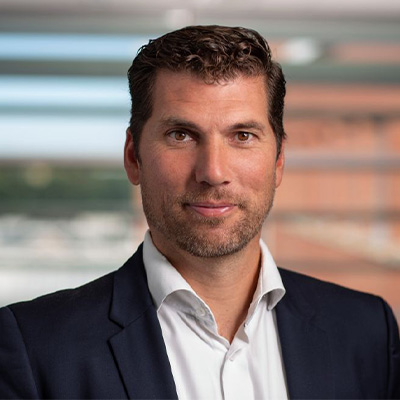
Interview with Niels Schallenberg, Fugro
11 September 2026
Could you briefly introduce your organisation (e.g. your history in Europe, countries of activity, key projects or partnerships)?
Fugro is the world’s leading Geo-data specialist, collecting and analysing comprehensive information about the Earth and the structures built on it. We have been involved in approximately 85% of all offshore wind projects in Europe, something we’re immensely proud of.
Founded in 1962 in the Netherlands, we now have around 10,000 talented people in 57 countries. Through our expertise in site characterisation and asset integrity, we help clients understand the conditions above, on, and below the Earth’s surface to reduce uncertainty, manage risk and make informed decisions throughout an asset’s life cycle, from design and construction through to operations, maintenance and end-of-life decisions.
Recent projects include geotechnical investigations for Oriel Wind Farm, set to become Ireland’s first commercial-scale offshore wind project; site characterisation work for the Berwick Bank development in Scotland, one of the largest proposed offshore wind farms in the world; geophysical and archaeological surveys for the Rimini offshore wind farm, one of Italy’s first fixed-bottom offshore wind projects; and site investigations for TenneT Germany’s LanWin1 and LanWin2 offshore grid connection projects, part of a major programme to connect offshore wind energy to millions of European households.
What are the most exciting developments you have seen in the wind industry?
The industry has come a long way since the world’s first offshore wind farm was commissioned in 1990. Offshore wind has evolved into a core part of Europe’s energy mix and is playing an increasingly important role in strengthening energy security.
This progress has been driven in part by strong policy support and growing cooperation between European nations. A good example is the third North Sea Summit, held in Hamburg in January 2026, where nine countries signed a declaration setting a collective target of 300 GW of offshore wind capacity by 2050. Achieving an ambition of this scale will require continued investment and close collaboration across the entire offshore wind supply chain to ensure projects move efficiently from planning to delivery.
Alongside this political momentum, the scale and complexity of offshore wind projects have grown significantly. Developments are moving into deeper waters, cable routes are becoming longer, and turbine sizes continue to increase. Offshore wind has also expanded beyond its traditional North Sea stronghold, with growing activity across the Baltic, Celtic and Mediterranean seas.
Floating wind is another particularly exciting area of development. We’re also seeing increased interest in deepwater solutions that bridge the gap between fixed-bottom and floating technologies, helping open up new areas for offshore wind deployment.
These industry developments have driven significant innovation across the supply chain. At Fugro, we have continued to develop technologies and ways of working that support increasingly complex offshore wind projects, including deep-push cone penetration tests that enable us to investigate deeper subsurface conditions, and high-resolution seismic surveys that help identify buried boulders and other potential construction risks. Alongside this, the growing use of remote operations and uncrewed surface vessels is helping improve safety, reduce personnel exposure and support more sustainable project delivery.
These changes have not only transformed the offshore wind industry but also shaped our own journey. What began as a focus on supporting project development has expanded into a full life cycle offering, with Fugro now providing Geo-data, insights and asset integrity solutions from site selection and design through to construction, operations, life extension and decommissioning.
What changes would you like to see in the sector?
The themes of energy security, affordability and sustainability remain central to the offshore wind sector. While policymakers across Europe have made significant progress in supporting offshore wind deployment, recent failed auction rounds highlighted some of the challenges the industry continues to face. In particular, they exposed a disconnect between auction design and the commercial realities of developing offshore wind projects. This has led to volatility across the industry and wider supply chain, affecting not only our part of the value chain but also the many parties involved in later project phases. A stable pipeline of projects, driven by continued government support through legislation, permitting and economic measures, would greatly benefit the entire supply chain.
Encouragingly, we are now seeing signs of recovery. Reforms in several markets are helping restore confidence, resulting in stronger auction outcomes and renewed interest from developers and investors.
Looking ahead, I would like to see greater collaboration between developers, supply chain partners, transmission system operators (TSOs), and regulators to reduce uncertainty, shorten project timelines and accelerate project delivery. This should be accompanied by a stronger focus on whole-project value rather than simply selecting the lowest-cost service provider for a single project phase. Better data and insights at the right stage of a project can improve decision-making, reduce risk and deliver better outcomes.
Continued investment in enabling infrastructure will also be critical. Offshore wind projects depend on grid connections, ports, vessels, equipment and skilled personnel, many of which are in high demand across the wider energy sector. TSOs have a particularly important role to play in ensuring grid infrastructure keeps pace with offshore wind deployment, and close coordination across the value chain will be essential to avoid bottlenecks and keep projects moving forward.
Ultimately, the sector needs stable policy frameworks, auction mechanisms that support long-term investment, and a visible pipeline of projects. Combined with greater collaboration across the industry, these foundations will be critical to maintaining momentum and delivering Europe’s offshore wind ambitions.
What role do you see your organisation playing in the future development of wind energy?
The Geo-data, insights and consulting services we provide support every stage of a project, from early site selection and development through to construction, operations, life extension and decommissioning.
Looking ahead, we see our role evolving further as a long-term partner to the industry, providing connected insights across the entire asset life cycle. As projects become larger and more complex, the volume of data collected continues to grow, often reaching tens of terabytes during the development phase alone. The challenge is no longer simply collecting data, but turning it into actionable insights that support better decisions.
I would like to see Fugro play a leading role in making Geo-data more accessible, integrated and actionable, enabling developers, operators and policymakers to make faster, better-informed decisions, reduce risk and improve project delivery.
How has WindEurope membership benefitted your organisation?
WindEurope is key to our business. It brings together the organisations, policymakers and experts needed to address some of the sector’s biggest challenges and opportunities.
Through its events, research and working groups, WindEurope provides valuable insights into market trends, policy developments and progress towards Europe’s offshore wind ambitions. Just as importantly, it creates opportunities for collaboration, allowing us to share knowledge, contribute our expertise and learn from others across the industry.
It enables us to play an active role in shaping the future of offshore wind. It ensures our voice is part of the conversation while helping us contribute to the collective effort required to deliver Europe’s energy transition.
Looking ahead 10 years, what do you hope to have achieved?
I would like Fugro to be recognised as a trusted long-term partner to the offshore wind industry, supporting clients throughout the full asset life cycle. While Geo-data will remain at the core of what we do, our ambition is to help developers and operators turn data into the insights needed to make faster, better-informed decisions and reduce their capital and operational cost levels.
I hope that, in 10 years’ time, we can look back on a decade where demand has stabilised allowing the entire industry to have optimised the capital needs and associated capacity of the supply chain. In this period, Fugro helped accelerate offshore wind deployment, improved the performance and longevity of offshore assets, and contributed to making renewable energy a more secure and resilient part of Europe’s energy system.
Find out more about Fugro