WindEurope Bulletin
May 2026
19 May 2026
A message from the CEO
Dear WindEurope member,
Can I start by thanking all of you who came to Madrid for our Annual Event last month. There was a great energy across the whole week: busy exhibition halls, lively conversations, and a real sense of the industry coming together at an important moment. Because the challenges Europe is facing are very real.
The last few weeks have reminded us that dependence on imported fossil fuels comes at a high cost. Europe loses €500 million a day keeping up this reliance. It’s a situation that leaves us exposed to volatility and rising prices.
But we have a clear way forward. Home-grown renewable electricity is the foundation of a secure and resilient Europe. Our industry stands ready to deliver it. Now Governments need to play their part too.
That’s why in Madrid, we set out our Call to Action – our collective message to the EU and Member States, with 10 simple steps to move Europe from crisis to confidence in the next decade.
Three priorities stand out:
- Boosting the supply of home-grown electricity by accelerating permitting and repowering existing sites. We have the projects, now we must build them faster. Wind should be treated as an overriding public interest across Europe, with faster approvals and simpler procedures.
- Connecting this supply to demand with stronger grid infrastructure.
- Making electricity the cheapest option by cutting unnecessary taxes and removing barriers.
These are practical, actionable steps. Together, they’ll strengthen Europe’s energy security, competitiveness, and resilience. You can read more about the call here.
Madrid showed us that there’s strong alignment on this between industry and policymakers. In the words of Spanish Prime Minister Pedro Sánchez, when it comes to energy, Europe needs to choose between turbines or turbulence.
But now we must turn that shared understanding into implementation; quickly and at scale. And since Madrid we’ve been working to disseminate the call and to stress its key points with EU and national policymakers. This is our industry’s shared message to Governments, so we’d greatly appreciate it if you can flag and share it on your own channels too.
Wind energy is a strategic asset for Europe, and these measures will put us back in control. We have the technology, the expertise, and the momentum. Now is the moment to act so that Europe can move decisively from crisis to confidence.
Kind regards,
Tinne Van der Straeten
WindEurope Intelligence Platform
Send in your feedback!

Do you use our WindEurope Intelligence Platform (WIP)? If so, we’d be very grateful to hear from you.
We’d like to know how you find navigating the WIP, which products you use most and what you think could be improved. Our survey should take no longer than 5 mins to fill out – you can find it here. Many thanks for your feedback!
If you do not often use the WIP but would like to find out more, please contact us at [email protected].
The Madrid Call to Action
10 steps to transform Europe’s energy outlook
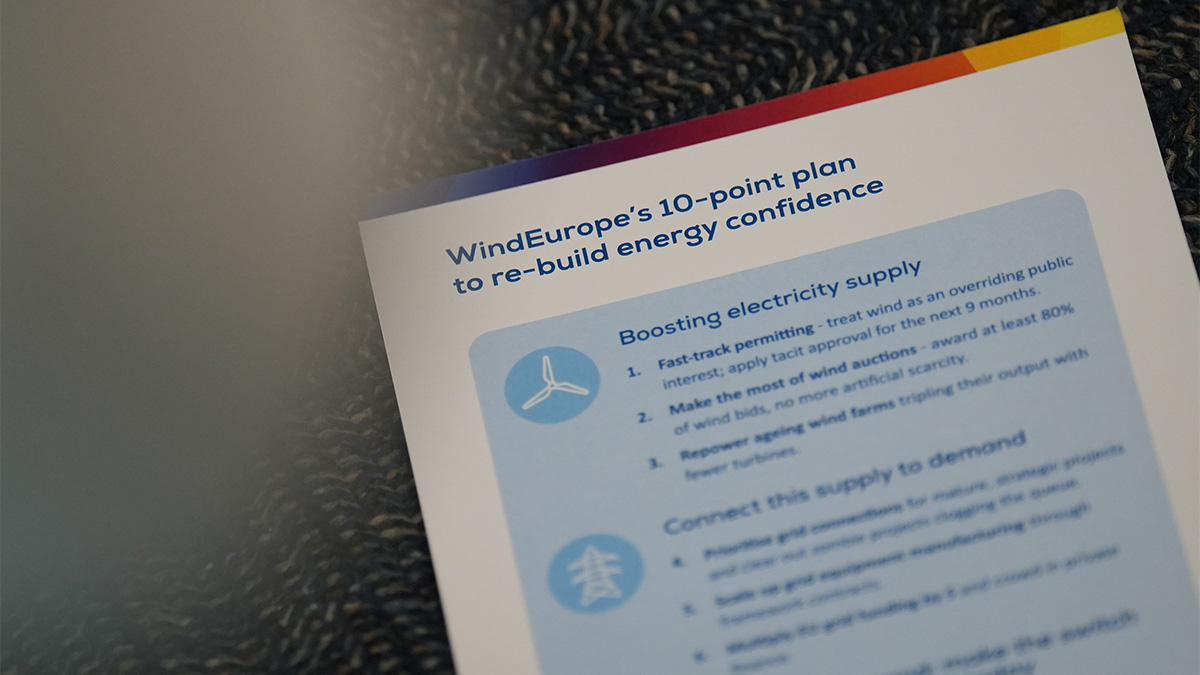
Homegrown electricity is Europe’s only future-proof energy strategy. The war in Iran has reminded Europe once again that fossil fuels need to be replaced by homegrown electricity ASAP. At WindEurope Annual Event’s in Madrid, our industry published the ‘Madrid Call to Action’. It calls on EU leaders to treat electrification as a strategic priority and sets out 10 readily available actions to move Europe from crisis to confidence in a decade.
This is our industry’s clarion call to policymakers across Europe. Please circulate and share it with your contacts where you can – thank you for your support!
Members’ Successes
Europe’s Repowering Moment: Turning a Maturing Fleet into a Climate
Advantage (ERM)
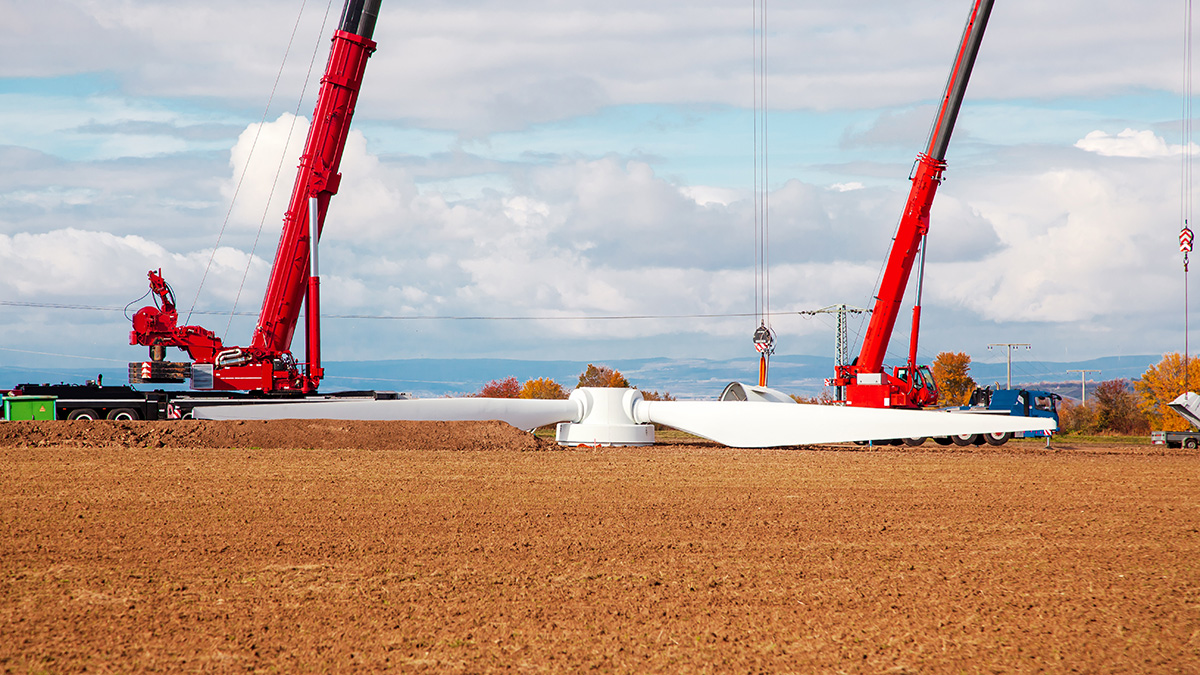
As industry leaders gathered at WindEurope Madrid 2026, a defining transition is taking shape. Europe’s wind sector is entering a critical maturity phase – one where the greatest gains in renewable power may no longer come from building new assets, but from repowering and responsibly managing the ones already in place.
Across the continent, 26 GW of onshore wind capacity has already exceeded 20 years of operation, and this figure will rise to more than 57 GW by 2030. Much of this capacity sits on Europe’s strongest wind sites with established grid access—making repowering one of the fastest, most cost-effective pathways to expand clean energy generation. Modern turbines can deliver three to four times the output of earlier models, often with fewer units on site. Leveraging existing infrastructure reduces permitting timeframes, cuts delivery risk, and lowers levelised cost of energy by 25–40%. In parallel, communities already accustomed to wind infrastructure are typically more receptive to upgrades—especially when engagement is transparent, proactive, and rooted in local concerns.
Yet the opportunity also carries responsibility. By 2030, Europe could generate 40,000–60,000 tons of turbine blade waste annually. Stakeholders increasingly expect credible circularity strategies, realistic cost and waste-management planning, and recycling pathways that protect both community trust and long-term asset value. The combined repowering and decommissioning market—already valued at USD 9–11 billion—is projected to nearly double by decade’s end. Repowering will be Europe’s fastest route to near-term climate delivery, while responsible end-of-life management will define the sector’s long-term credibility.
As Europe’s wind fleet matures, developers and asset owners need to consider several interrelated factors when evaluating repowering, life extension, or decommissioning: permitting, consenting & regulatory requirements, stakeholder & community engagement, circular economy & waste advisory, end-of-life and repowering strategy, and technical, environmental and HSE factors. Taking a structured approach to these elements can help ensure that repowering and end-of-life decisions support long-term asset value while aligning with climate and sustainability objectives. ERM is already working with clients on repowering assets and is uniquely positioned to help developers navigate the lifecycle shift.
Airborne wind energy demonstrates on-site clean power potential in
Dutch construction sector (Airborne Wind Europe)
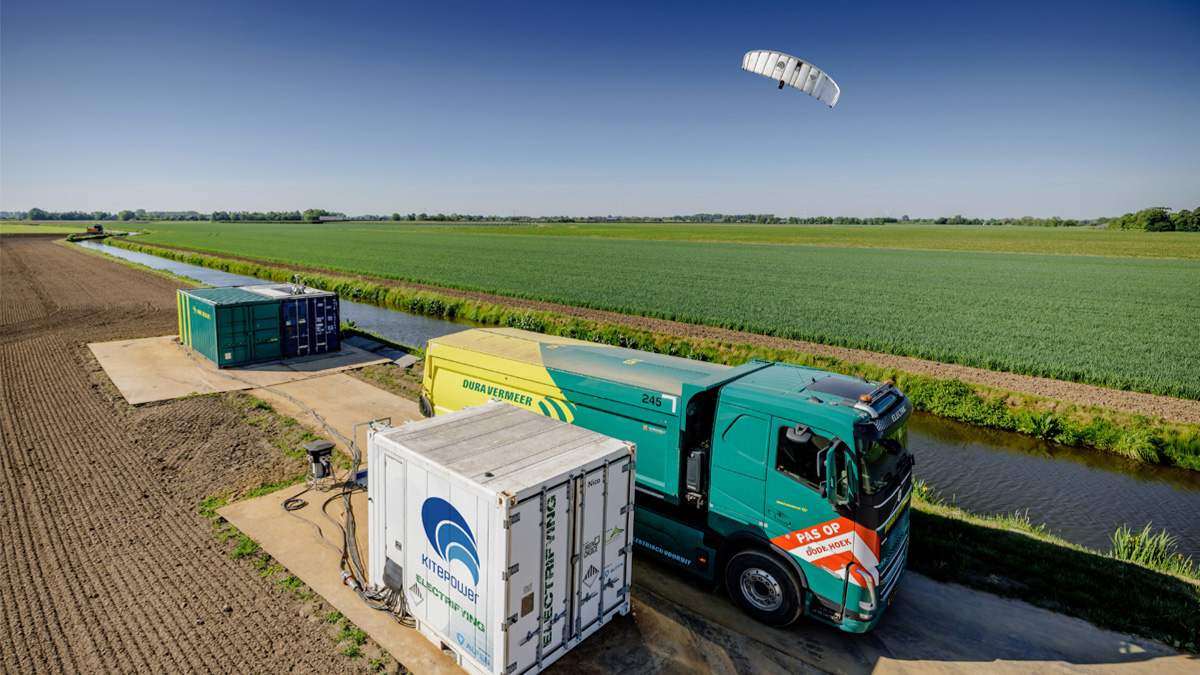
Cutting emissions on construction sites is becoming more urgent, but access to clean electricity remains a major challenge. In many parts of the Netherlands, getting a grid connection can take years, and even then, it may not provide enough power to run modern electric equipment. Early pilot projects are now showing how airborne wind energy (AWE) could offer a practical alternative.
Kitepower, a spin-off from Delft University of Technology, has developed a mobile system that generates electricity using tethered kites flying at higher altitudes, where the wind is stronger and more consistent than at ground level. By accessing these wind resources, the system can produce renewable electricity in locations where conventional solutions are limited or unavailable.
The system is designed to be simple, compact, and flexible. It fits inside a standard 20-foot container, can be set up in about an hour, and stores the electricity it produces in a battery. This allows construction sites to use power when they need it, without relying on the grid or diesel generators. The mobility of the system also makes it particularly suitable for temporary or constantly changing construction environments.
Since 2025, the system has been tested at two construction sites in the Netherlands. The first pilot was carried out with Dura Vermeer on the Mekante Diek project, followed by a second pilot with Mobilis TBI on the Groene Warden project. These projects provided an opportunity to test the system under real working conditions.
In both cases, the system was able to supply clean electricity directly on-site. This reduced the need for diesel generators and helped lower emissions such as CO2 and NOx. Beyond the technical results, the pilots also provided practical insights into permitting processes, logistics, and how the system can be integrated into everyday construction work without disrupting operations.
These results come at a critical moment for the sector. Many construction sites are temporary, remote, or constantly moving, making it difficult to rely on fixed infrastructure like the grid. At the same time, environmental regulations are becoming stricter, increasing the need for cleaner, and more flexible energy solutions that can be deployed quickly and efficiently.
This technology is especially relevant as Europe navigates the pressures of global energy markets. Developed and built in Europe, it strengthens the continent’s energy sovereignty and resilience, while contributing to a cleaner, and more sustainable future.
The pilots mark the first real-world demonstrations of airborne wind energy in the construction sector. They show how mobile, and off-grid renewable systems can help solve practical energy challenges on-site, moving the technology from concept to application. Further deployments are expected to build on these results and continue testing the system across a wider range of conditions.
WindEurope events
Technology Workshop – See you next month!
On 11-12 June, WindEurope meets in Rotterdam for our Technology Workshop – a special gathering exploring how innovation, data and digital solutions can help wind farms perform better.
450+ attendees from across the wind value chain will come together to talk resource assessment and analysis of operating wind farms. It’s a chance to share and compare applied research, practical case studies and validated methodologies from across the industry. Here’s the full programme. What else is in store?
- See innovation up close: explore 70+ posters onsite and meet the presenters.
- Get ready to network: at a special evening reception in a vintage setting.
- Take stock of our progress: at a special 15th anniversary retrospective session.
Join us in Rotterdam for a clear, practical look at how technology is helping the wind industry deliver better performance today – and tomorrow.
WindEnergy Hamburg 2026
WindEnergy Hamburg, the world’s biggest wind industry gathering returns later this year, from 22-25 September. WindEurope will be present onsite as the event’s European Partner – with a dedicated stage and sessions during the conference.
Registrations will open soon but you can still book your stand.