
News
Europe needs stronger ports and shipyards to deliver its offshore wind goals
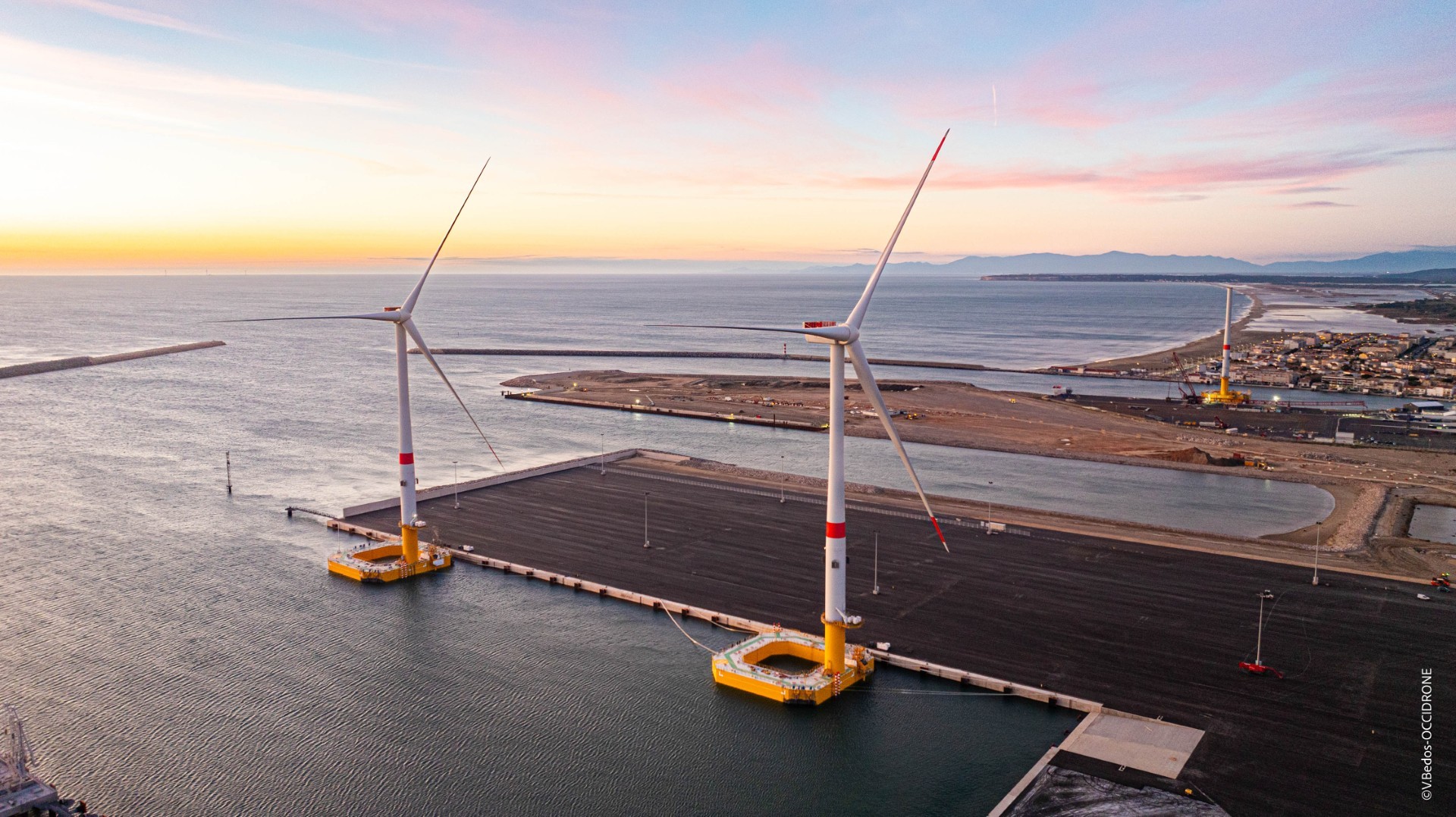
Credits: Port-la-Nouvelle - Qair Marine Eolmed, V. Bedos Occidrone
5 March 2026
European offshore wind has started the year with new confidence thanks to succesful auctions and the North Sea Summit in Hamburg. But it might soon hit a new bottleneck: Europe’s offshore supply chain is only as strong as the ports and vessels that support it. Yesterday the European Commission published two new initiatives: the EU Ports Strategy and the EU Maritime Industrial Strategy, both containing important measures to ensure Europe’s maritime industry and ports are ready for the upcoming offshore wind build-out.
The last days have shown, yet again, how vulnerable Europe’s energy system is to geopolitical shocks. Natural gas prices in Europe surged by over 40% since the escalation in the Middle East on 28 February, reaching their highest levels since 2023. This seriously undermines Europe’s industrial competitiveness.
Offshore wind is among Europe’s best bets to reduce its dangerous exposure to expensive and volatile fossil fuel imports. Last year alone, Europe invested €22.5 bn in new offshore wind. Europe has 39 GW of offshore wind capacity, rising to 73 GW by 2030 according to the new WindEurope Outlook.
New confidence
European offshore wind has gained new confidence with recent successful multi-gigawatt auctions in Poland and the UK. On top of that the North Sea Summit in Hamburg has created new momentum for offshore wind.
In Hamburg North Seas countries committed to provide two-sided Contracts for Difference (CfDs) for 10 GW of offshore wind each year between 2031-2040. They further pledged to removing regulatory obstacles to Power Purchase Agreements (PPAs). In exchange, Europe’s wind industry committed to mobilising €1tn of economic activity for Europe, creating 91,000 additional jobs and investing €9.5bn in the value chain, including manufacturing, port infrastructure and vessels.
Europe is already investing in new and upgraded manufacturing sites. But the offshore supply chain is only as strong as the ports and vessels that support it. Are Europe’s port infrastructure and its vessels ready for the accelerated build-out of offshore wind?
EU Ports Strategy – step forward but more ambition needed
Ports are indispensable for wind energy development – both onshore and offshore. Almost every wind turbine component passes through them. As turbines get more powerful, ports need reinforced quays, deeper berths, and crucially more space to store and handle the ever-larger turbine components. And as floating wind is set to kick-off ports will increasingly serve as assembly, storage and deployment hubs.
Europe’s port capacity is already behind demand. Europe urgently needs to invest another €2.1bn on top of the €4.7bn invested in recent years.
The new EU Ports Strategy recognises this investment need and calls on Member States to better align port infrastructure upgrades with upcoming offshore wind projects. It calls for faster and simpler permitting of port expansions. To enable that, the Strategy assumes port grid infrastructure to be in the overriding public interest. And it urges Member States to reduce grid-connection delays and to improve the electrification of ports.
These are crucial steps. But they will not be enough without more dedicated funding. Ports received nearly €90m in funding under the Connecting Europe Facility (CEF) between 2021 and 2024. The next CEF Transport budget is much larger, but investments in offshore wind-related infrastructure is still not clearly listed as a main priority. The Commission says private investment must take the lead. But Europe will only crowd in private capital with dedicated public de-risking instruments.
EU Maritime Strategy – support for Europe’s offshore wind fleet
The new EU Maritime Industrial Strategy aims to strengthen and protect Europe’s shipbuilding industry. Rather than providing financial incentives, the Strategy aims to ensure a level playing field with non-European shipyards. The EU commits to monitor distortive policies from third countries’ shipbuilding industries to detect unfair trade practices. It further proposes a coordinated pipeline of public orders to create stable demand for shipyards, along with faster permits for shipyard upgrades. WindEurope welcomes these measures but stresses the urgent need for additional funding.
It also aims to safeguard and protect Europe’s offshore wind vessel manufacturing. In doing so, it takes a pragmatic approach, focusing on those high value segments with an already strong industrial potential for manufacturing in the EU. These technologically sophisticated vessels, already produced in Europe today, include offshore support vessels and cable-laying vessels. A new Industrial Maritime Value Chain Alliance will help identify business cases for the European maritime value chain.
WindEurope will continue to work with EU institutions, Member States and industry to ensure ports and shipyards can deliver the offshore wind volumes Europe needs to deliver on its energy security and competitiveness goals.