
News
Europe’s wind energy workforce powers ahead – jobs, skills and opportunities for 2030
15 December 2025
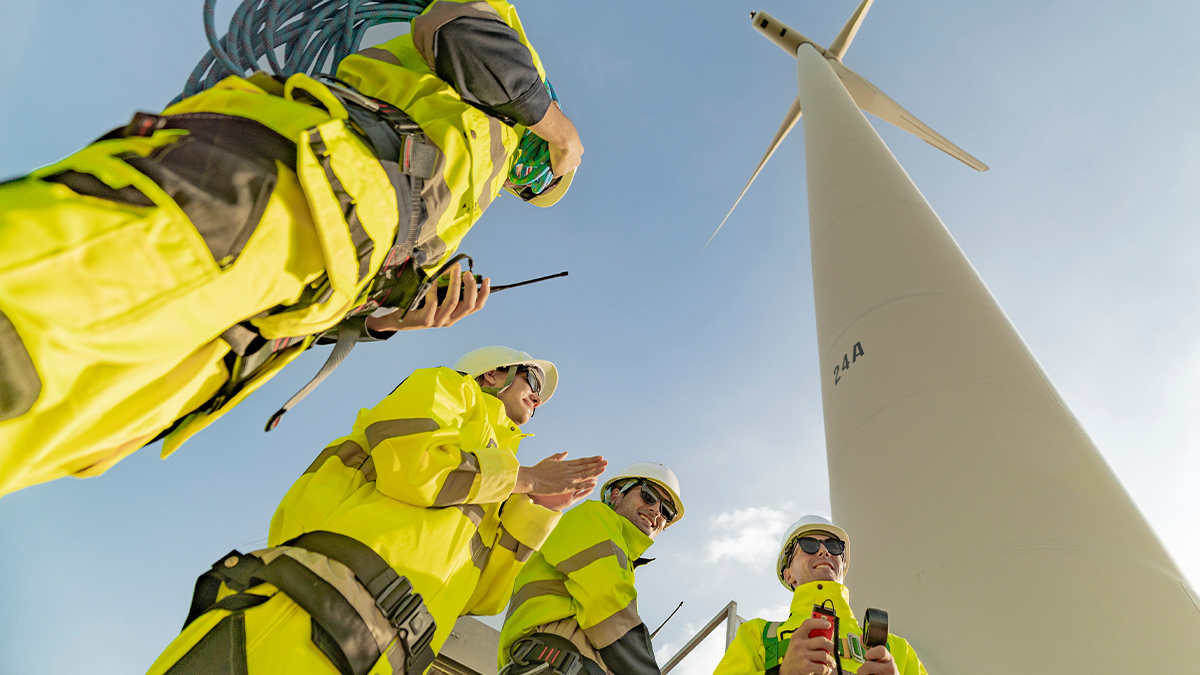
Europe’s wind industry continues to drive economic growth, energy security and employment. The European Wind Energy Workforce Report, published today, sees employment in wind growing from 443,000 jobs today to over 600,000 by 2030. The report has granular data on current employment levels and vacancies, and the most sought-after profiles and the skills required in the wind industry. It highlights the importance of the right vocational training and shows Europe needs a more strategic approach to workforce planning.
Wind energy is cementing its position as a pillar of Europe’s economy. Wind is more than clean, secure and home-grown electricity. It’s a major source of high-value jobs and industrial growth. That’s the main finding of Europe’s Wind Energy Workforce Report which WindEurope published today.
Europe’s wind energy industry today supports 443,000 jobs. 211,000 of those are direct jobs, spanning from wind farm development to manufacturing, installation, operation and decommissioning. Onshore wind remains the largest employer, but offshore wind is gaining ground, now accounting for 20% of direct jobs.
Employment in wind is set to steadily increase over the remainder of the decade. By 2030 the sector will provide 607,000 jobs. This assumes that Europe installs on average 30 GW annually over 2025-2030, in line with the latest WindEurope 2030 Outlook.
Wind energy has a truly European manufacturing footprint. Nearly half of all the direct jobs in wind are in manufacturing. Europe has more than 250 factories producing wind turbines and equipment for the grid connections. Over the last two years the industry has invested more than €14bn in new or expanded factories, some of which are portrayed in our Wind Works for Europe video series.
Wind energy expansion remains below target
Employment in wind could be growing even faster. But Europe is not building enough wind energy to meet its energy security and climate targets. As it stands the EU will have 344 GW of wind energy by 2030, well short of its 425 GW target. Persistent bottlenecks to a faster expansion of wind include cumbersome permitting, the insufficient build-out of electricity grids, the slow uptake of electrification and poor national auction design.
Wind jobs growing steadily, potential skills shortage too
The European wind sector faces serious skills shortages. Europe’s Wind Energy Workforce Report identifies 235 job profiles across the wind farm lifecycle and highlights critical gaps. Most urgently, 7,000 blade technicians, 6,500 field engineers and 5,000 pre-assembly technicians are needed before 2030. Addressing these skills shortages is essential for Europe to meet its wind energy ambitions.
This will require a more strategic approach to workforce planning. WindEurope’s new report can help here. It offers real-life data to help identify priority roles at every stage of the wind supply chain. Policymakers must endeavour to scale up training programmes for key roles. They must encourage retraining workers from other sectors. They should harmonise certifications and enable EU-wide skills mobility. And they should promote diversity in technical and leadership roles to ensure a sufficiently big talent pool.
8 out of 10 critical roles where we see the largest shortage will rely on Vocational Education and Training (VET). Europe has to give more visibility to these career paths and increase their attractiveness.
What is the industry doing about it?
Europe’s wind energy workforce is getting ready to power the continent’s energy transition. With the right investment in skills and collaboration, the sector will continue to deliver jobs, innovation, and climate solutions for all Europeans.
As a first practical step, WindEurope will launch a Workforce Development Tool, enabling users to filter workforce data by country, lifecycle phase, and specific job profiles. This will help anticipate training needs, direct investment strategically, and establish new training centres where they are most needed.