
Wind energy is one of the most sustainable forms of electricity generation. Wind turbines have near-zero water consumption and a minimal environmental footprint. The energetic payback of a wind turbine is remarkably short compared to its lifetime. Modern wind turbines take 3-14 months to generate the energy required to manufacture, transport, install, operate, and dismantle them. After that, the turbines generate clean energy for two decades and more, decarbonising our power supply one spin at a time.
Up to 90% of a wind turbine’s mass is recyclable using well-established waste management practices. Wind turbine towers, nacelles, and foundations are made of standard, inert materials such as steel and concrete and can be recycled with conventional methods. Yet the European wind industry is determined to do more. We want to close the recycling loop.
The industry has committed to a landfill ban for decommissioned wind turbine blades. We want to reuse, repurpose, recycle or recover 100% of our blades within Europe. Over the last years, Europe has developed an ecosystem of waste management companies, industry consortia and startups – all aiming to increase wind turbine blade circularity.
WindEurope calls on EU policymakers to enshrine the landfill ban commitment in law, ensuring consistent implementation across all Member States. In the meantime, the sector continues to improve its sustainability: with innovations in low-carbon steel, recyclable blade materials, and longer-lasting turbine designs that reduce raw material demand.
Keeping components in operation for as long as possible avoids waste altogether. Routine maintenance and repair extend blade lifetimes, while refurbished blades and turbines are already entering a growing second-hand market both within and outside Europe.
Giving Wind Turbines a Second Life
Company: Business In Wind
Location: Barneveld, The Netherlands
Business In Wind specialises in dismantling, refurbishing, and reselling used wind turbines across Europe and beyond. Their new Barneveld facility, built to BREEAM Excellent standards, showcases circularity in action—from a nacelle-turned-meeting room to blade-root furniture and repurposed turbine parts. The company’s “soft repowering” model supports small wind farm owners and promotes reuse over landfilling.
Blade Barrier® noise protection walls made from a turbine
Company: Blade–Made
Location: The Netherlands (pilot sites; international rollout planned)
This is a world-first – sound barriers made from full wind turbine blades. The modular design (two whole blades plus a cut section) is being tested for noise reduction, environmental cost, and feasibility. It was installed on an earth slope with minimal foundations, and early results are promising so far. Market introduction should follow soon in the Netherlands and further afield.
More projects
At Thor: Reused monopile covers get a second life
Company: RWE
Location: 22 km off Jutland, Danish North Sea (Thyborøn/Thorsminde)
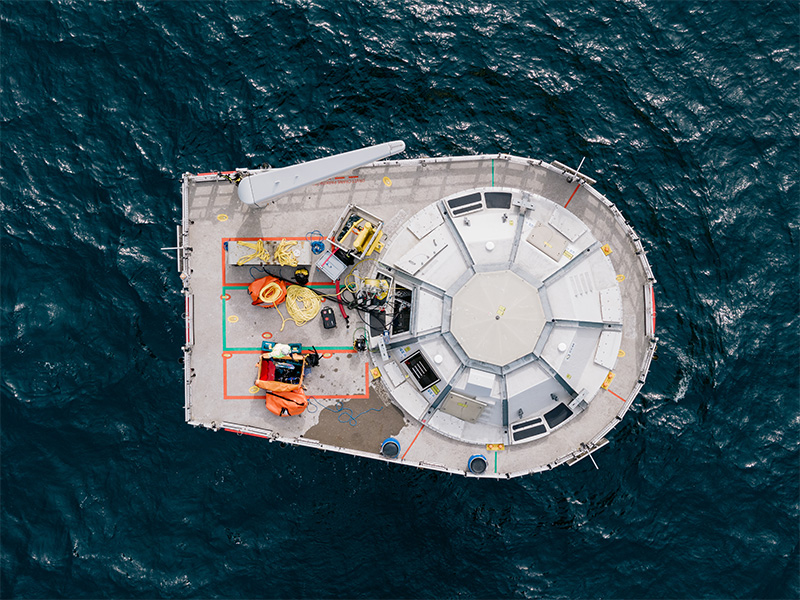
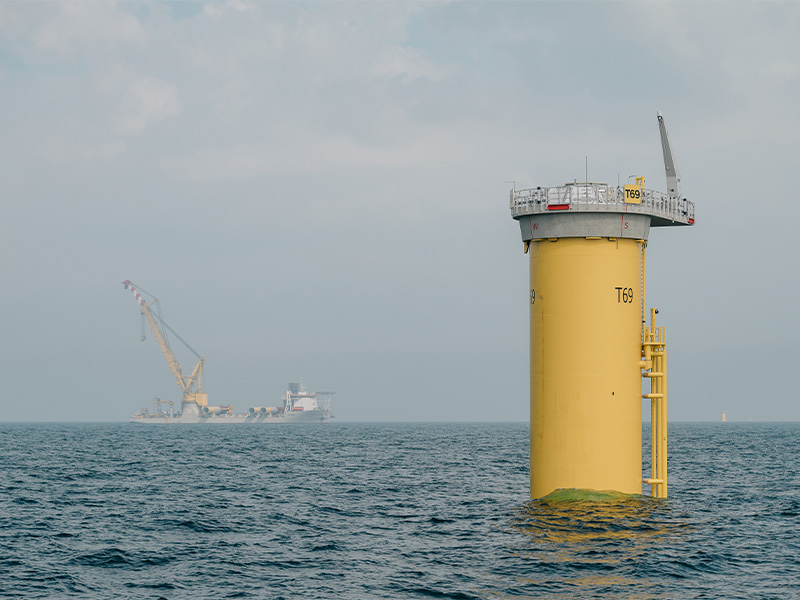
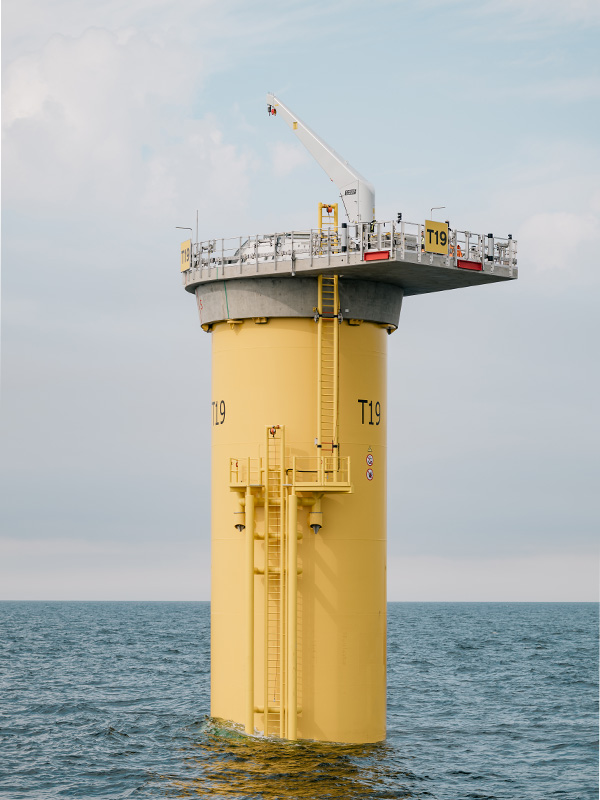
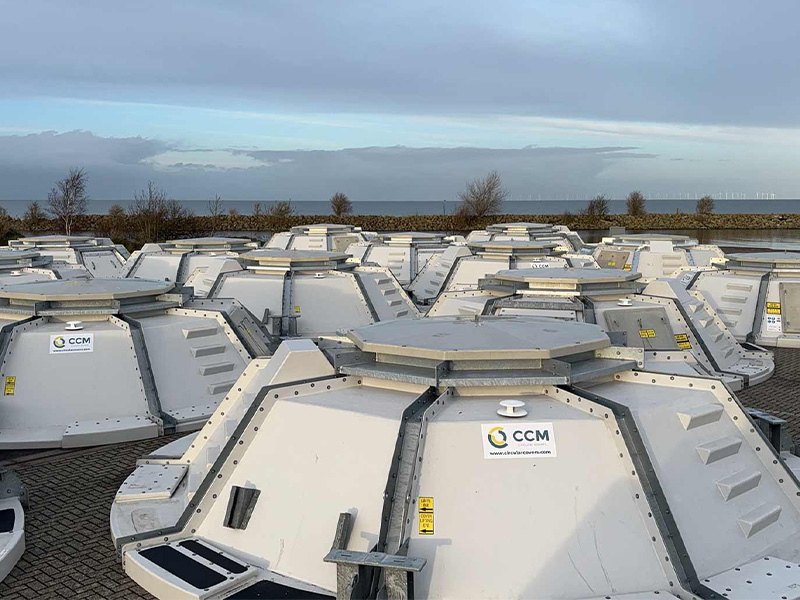
RWE is reusing adjustable hard covers from Dutch firm Circular Covers B.V. to protect Thor’s monopile foundations at sea until the first turbines go up in 2026. The 1.1 GW wind farm is also piloting CO2-reduced steel towers and recyclable rotor blades. Once commissioned in 2027, Thor will supply green power to over 1 million Danish households – creating 50 to 60 local O&M jobs in Thorsminde.
When a blade can no longer generate power, it can still serve new functions. Sections of blades are being converted into pedestrian bridges, playgrounds, urban furniture, and shelters, giving these materials a creative and practical second life.
Sneakers made from recycled turbine blades
Company: ACCIONA Energía (with El Ganso)
Location: Tahivilla Wind Farm, Cádiz, Spain (manufactured in Portugal)
A new line of sneakers incorporating recycled wind-turbine blade material from ACCIONA’s Tahivilla Wind Farm. After more than a decade in service, blade composites are transformed into durable shoe components through a circular manufacturing process. The collaboration with fashion brand El Ganso turns end-of-life turbine materials into everyday footwear.
From turbine to tiny house - A nacelle gets a new life
Company: Vattenfall (with Superuse & Blade-Made)
Location: The Netherlands (display at Dutch Design Week and WindEurope 2025)
Vattenfall and design studio Superuse converted a retired wind-turbine nacelle from a V80 2 MW turbine from the Gols wind farm in Austria. The turbine stayed 20 years in service and generated 73 GWh. It then became a fully functioning tiny home. The house features a kitchen, bathroom, living space, solar panels and heat pump. That shows how wind-industry materials can be reused with minimal processing not just recycled. The project demonstrates circular design at scale and invites industry to rethink how turbines are decommissioned and rebuilt into everyday solutions.
Turbine-made: giving retired blades a second life
ACCIONA Energía
Location: Australia (first blade sourced from Waubra wind farm, Victoria)
ACCIONA’s Turbine Made is an Australian-first circular-economy programme turning decommissioned turbine blades into new materials and products. The initiative brings designers, researchers and manufacturers together to co-develop applications using blade-derived particulates—following the example of their prototype surfboards. With 31 Australian wind farms hosting 15+ year-old turbines, Turbine Made hopes to divert blades from landfill, build local value chains, and scale end-of-life solutions for renewables.
Urban playground & furniture from end-of-life blades
Company: Blade–Made (with partners incl. ENECO, Business in Wind)
Location: The Netherlands (Dutch Design Week 2022 showcase)
Blade–Made is turning retired blades into durable playgrounds and urban furniture. Benefits include low maintenance, solid environmental performance, and a distinctive blade aesthetic that creates community “give-back” spaces.
Turbine-made: giving retired blades a second life
Company: ACCIONA
Location: Waubra wind farm – Victoria, Australia
ACCIONA has created a world first – surfboards made from decommissioned wind turbine blades. They created 10 prototype surfboards to start, using a blade from ACCIONA’s Waubra wind farm in Victoria. The boards were hand-crafted on the Gold Coast. This builds on ACCIONA’s broader work repurposing blade material (e.g. footwear, solar-tracker components) and scaling end-of-life solutions.
Recycled Turbine Blades Hit the Slopes
Company: Vattenfall (with Gjenkraft & EVI Skis)
Location: Europe-wide project (blades sourced from the Netherlands, skis produced in Norway)
Vattenfall has teamed up with Gjenkraft and EVI to transform decommissioned wind turbine blades into high-performance skis. The blades, once part of large wind farms, are processed to extract carbon fibre and composite materials now repurposed into skis built for durability and performance. The project highlights the challenge and now opportunity of blade end-of-life solutions, as thousands of turbines worldwide reach retirement. Vattenfall aims for 100 % blade recycling by 2030 and sees projects like this as proof of what’s possible.
More projects
BladeBridge Amenity at Meenadreen wind farm
Company: Energia Group (with BladeBridge)
Location: Meenadreen / Leghowney Loop Trail, Co. Donegal, Ireland
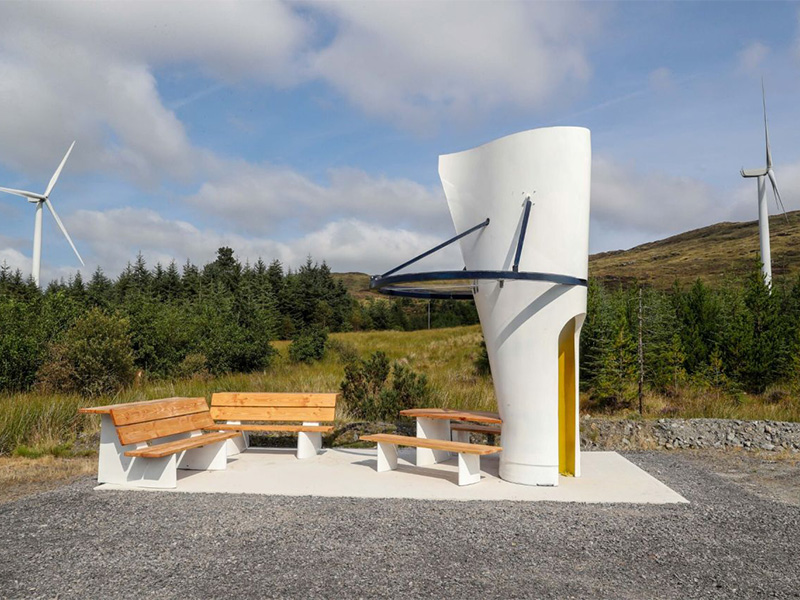
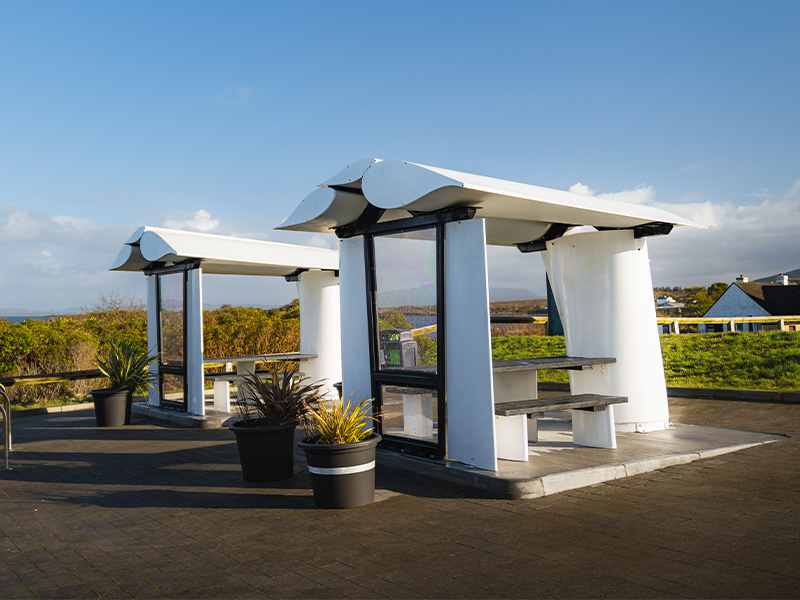
Energia Group has transformed a decommissioned turbine blade from its Meenadreen wind farm into a rest-area amenity for walkers along the popular Leghowney Loop trail. The blade replaced during maintenance in 2020 has been repurposed into a sculptural 9 m bench with picnic tables, plus a memorial sculpture and shelter.
E-Bike Charging “E-Hub” built from Repurposed Turbine
Blades
Company: BladeBridge (with the ESB)
Location: Ireland
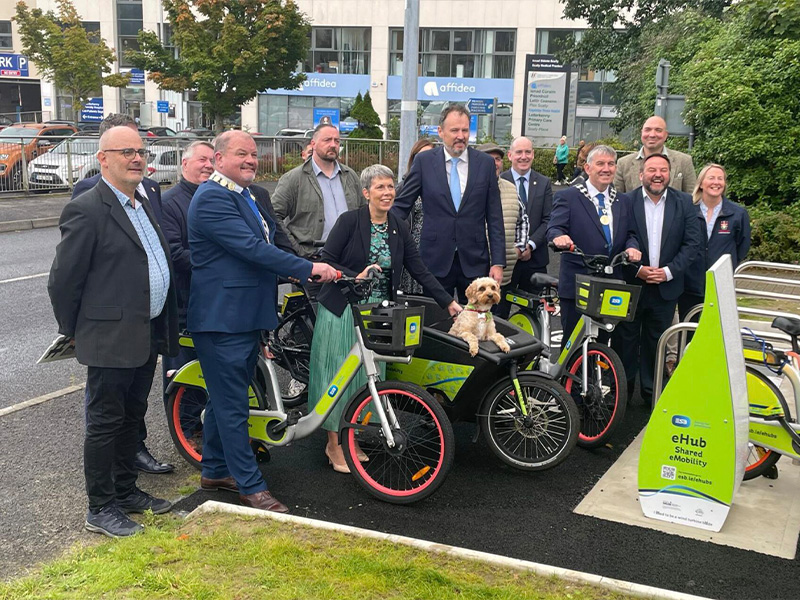
BladeBridge and the ESB are developing durable e-mobility hubs made from decommissioned wind-turbine blades, turning blade waste into public charging shelters for e-bikes, cargo bikes and e-scooters. The project, part of the ESB’s 2050 Accelerator programme, is a step forward for circular infrastructure and supports the ESB’s Net Zero 2040 goals by diverting blades from landfills while adding to the urban landscape.
Achill Shelter, double blade installation on Ireland’s Atlantic edge
Company: BladeBridge (with Mayo County Council)
Location: Achill Island, County Mayo, Ireland
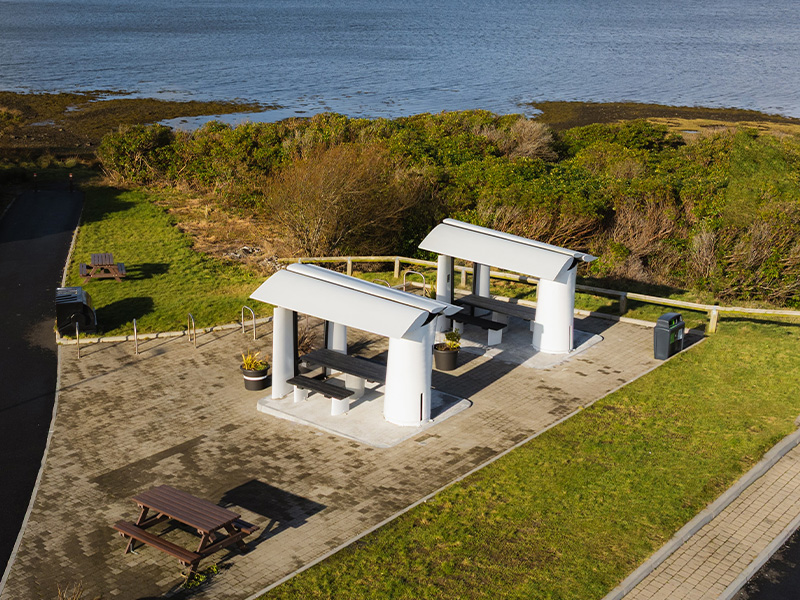
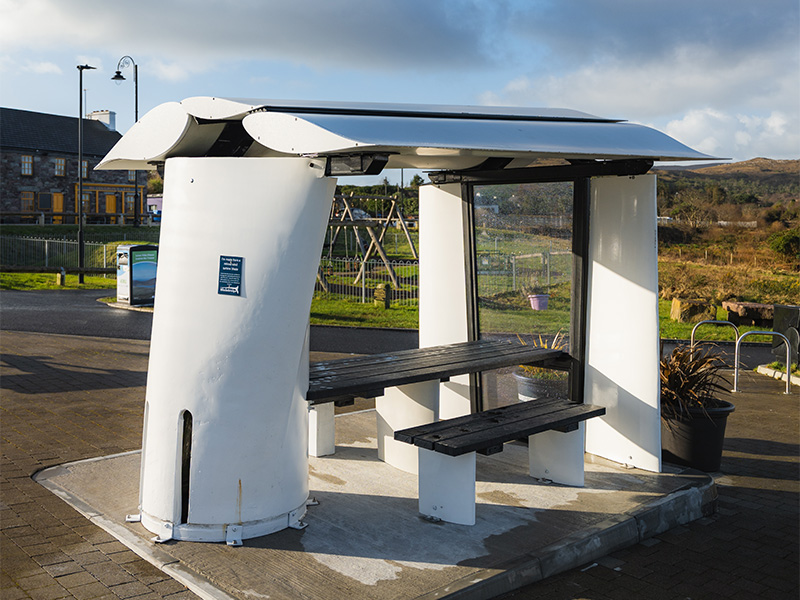
Custom double shelters built from a 20 m retired turbine blade (ex-Barnsmore Wind Farm, Donegal, 20 years in service). Designed to withstand harsh Atlantic weather, the installation offers picnic seating, benching, wind/rain shelter, and bike parking for passers-by overlooking the ocean. This is turning end-of-life blades into durable public amenities.
Recycling transforms end-of-life blades into new resources for industry. Different processes are being developed to recycle valuable materials, from mechanical grinding to thermal and chemical recycling routes that aim to separate and reuse fibers and resins. Although some technologies are still emerging, the industry is scaling up solutions to make blade recycling an integral part of the circular wind economy.
Spain’s First Blade Recycling Plant
Company: EnergyLoop
Location: Cortes, Navarre, Spain
Backed by Iberdrola and FCC Ámbito, EnergyLoop operates the Iberian Peninsula’s first dedicated wind turbine blade recycling facility. With a capacity of 10,000 tonnes per year, the plant transforms composite materials into reusable resources for sectors like construction, automotives and aerospace. It’s a flagship for circular economy innovation in Europe’s wind sector.
Recyclable Farewell to Ørsted’s oldest onshore wind farm in Ireland
Company: Ørsted
Location: County Tyrone, Northern Ireland
After 20+ years powering 3,200 Northern Irish homes annually, Ørsted are decommissioning Owenreagh 1 – and focusing on recyclability. The turbines were dismantled in two weeks, with components repurposed as durable polymers for use in new wind farms and urban infrastructure. Some parts have even made it into street furniture or construction materials.
Blades Reborn at Greater Changhua
Company: Ørsted
Location: Greater Changhua, Taiwan
Ørsted is pioneering blade circularity by installing new turbine blades made with recycled glass fibres from decommissioned ones. This innovation, developed through the DecomBlades project with Siemens Gamesa and nine partners, reduces reliance on virgin materials. It marks a major step toward sustainable offshore wind operations.
Recyclable blades debut at Sofia Offshore Wind Farm
Company: RWE (with Siemens Gamesa)
Location: ~195 km off the North-East of England
Sofia will soon be the UK’s first offshore wind farm to use recyclable rotor blades. Half of its 100 turbines (SG 14-222) will carry 150 Siemens Gamesa recyclable blades between them. Assembled in Hull, these blades are made with a resin that can be separated at end-of-life and repurposed – as consumer goods for example. Sofia will begin operating in 2026, powering up to 1.2 million UK homes with a total output of 1.4 GW.
The second wind project: a boat hull made from a blade
Company: Resolve Composites (in partnership with Siemens Gamesa)
Location: Nova Scotia, Canada (blade sourced in Denmark)
Resolve Composites have turned a decommissioned wind turbine blade into a custom high-end boat hull using 100% recycled unidirectional fiberglass, an example of large-scale composite recycling and circular manufacturing. The project recovered 162 kg worth of fiberglass and demonstrated CO2 savings. This was all possible thanks to Resolve’s patent-pending ReceTT transformation technology – chemically separating materials before post-processing.
Piloting chemical recycling
Company: Vestas, Stena Recycling
Location: Denmark
In the CETEC project was a research collaboration between Vestas, the Danish Technological Insitute, Aarhus University and Olin. In the project the partners found a way to separate blade materials which enables the different materials to enter their own recycling loops. Vestas and Stena Recycling have established a partnership to test this new chemical recycling method. Together they want to scale it up and make it commercially viable.
Where recycling is not yet feasible, cement co-processing offers a valuable recovery route. The glass fibers in blades replace virgin raw materials in clinker production, while the resin provides energy for the process. This method can reduce cement production CO2 emissions by up to one tonne per tonne of blade waste and lowers the need for fossil fuels.
From Blades to Cement: Reducing CO2 through Co-Processing
Company: Kuusakoski Recycling
Location: Hyvinkää, Finland
The Finnish company Kuusakoski is championing cement co-processing as a way to recover wind turbine blade waste. Blades are shredded in advanced technology processes which avoid harm to humans and environment. The shredded composites are then delivered to costumers to be used as raw material in cement production processes. That way waste is turned into a new product.
A recent report published by WindEurope and other European associations shows that cement co-processing significantly reduces the CO2 impact of cement manufacturing as well as waste management. Each tonne of end-of-life composite waste treated in a cement facility saves up to 1 tonne of CO2 compared to traditional waste incineration methods.
BLADES2BUILD
Company: Holcim, Endesa and partners
Location: Aldeavieja, Ávila, Spain
With the BLADES2BUILD partnership, an EU‑funded project bringing together 14 corporate and academic partners from eight countries, Holcim is making great strides to provide a scalable solution that transforms old wind turbine blades into low-carbon concrete.
In a landmark step toward solving the blade waste challenge, wind farm developer Endesa and Holcim have successfully demonstrated a full-scale circular solution at the Aldeavieja wind farm in Ávila, Spain. Endesa used concrete which contained recycled fibres from old wind turbine blades for the repowering project’s new turbine foundations.
In a next step, BLADES2BUILD will prove its scalability with a 6,000 m2 treatment plant currently under construction in Castilla y Leon (Spain).
Circular Decommissioning at Muel Wind Farm
Company: RWE (with Renercycle)
Location: Muel Wind Farm, Spain
RWE, together with circularity partner Renercycle, has completed the decommissioning of the Muel Wind Farm in Spain with an exceptional 99.85% recycling and recovery rate. Nearly every component from metals to composites and mechanical parts was recovered, repurposed, or reprocessed. The project showcases how advanced decommissioning practices can drastically reduce waste, support local recycling value chains, and set new standards for end-of-life management in the wind sector.
WindEurope members and partners active in wind turbine blade circularity





Further reading
Circularity is only one theme in WindEurope’s wider work on sustainability. Wind energy contributes to improving biodiversity and protecting the environment. From marine conservation to pollinator spaces and bird hotels - wind turbines are designed to support their natural surroundings. Our members are also working towards more supply chain sustainability. The Wind Energy Initiative aims to enhance ESG transparency and elevate the performance standards of suppliers within the wind energy industry.
Sustainability and circularity are frequent themes of wind energy related mis- and disinformation. Social media is full of false claims around the recyclability of wind turbines. Learn more about dis- and misinformation.