February 2026

WindEurope Bulletin

February 2026

19 February 2026

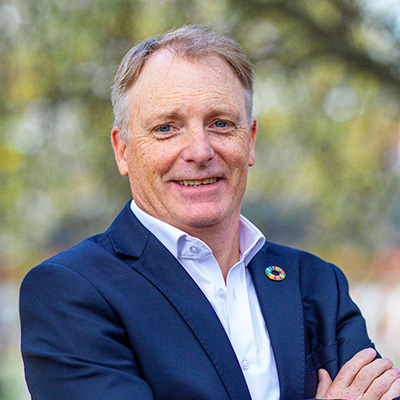
A message from the new CEO

Dear WindEurope member,

I’m delighted to reach out to you in this first monthly Bulletin since becoming CEO. I’d first like to wish you all the very best for the months ahead – and I look forward to meeting you all very soon!

Stepping into this role is an honour and a great responsibility. And I’m grateful for the confidence and trust you’ve placed in me as I take on this mission. These are defining days for Europe – with major geopolitical, economic, and climate challenges ahead. One thing is clear – wind will be at the heart of the solution. It’s home‑grown and delivers clean, affordable electricity. It strengthens energy security, and supports an industrial base with high‑quality jobs. And above all it puts us on course for net-zero by 2050.

And we’re ready to play our part. I’ve had a chance now to meet many of you on the ground. And I’ve seen firsthand the drive and enthusiasm across our industry – and the willingness to meet new challenges. WindEurope members are a credit to this sector – and it’s clear the future of wind is in capable hands.

But we can only make progress with the right framework.

Permitting issues, infrastructure delays and slow electrification are all holding us back. And recent responses from policymakers have been mixed. In January, North Seas energy ministers signed up to an “Investment Pact for the North Seas”. Governments commit to build 15 GW of offshore wind a year between 2031-2040, and to derisk offshore investments. And in return, our industry pledges to bring down energy bills, deliver 91,000 new jobs and mobilise €1tn in economic activity.

On the flip side, we saw some very unhelpful discussions at the Antwerp Industry Summit and Alden Biesen EU leaders meeting. While all sides called for more renewables to bring down power prices, they also questioned Europe’s carbon reduction policies and considered reopening the electricity market design. Far from slashing high energy bills, this would undermine investment signals and lead to a sharp fall in clean energy investments – just when we are looking to boost competitiveness. The most recent market intervention in 2022 saw turbine orders fall by 47%. So it’s vital that Governments drop this and use other tools to shield consumers from volatility.

As CEO my aim will be to work with all stakeholders in this way – to stay the course on pro-renewables policies and unlock the growth of wind. And indeed this is a key focus of our Annual Event this April.Across 80+ conference sessions, you’ll hear from 400+ top speakers from Government, industry and beyond. There’ll be 16,000+ attendees in all and 500+ exhibitors there as well. It’ll be a chance to catch up and to see our industry in action. You can register here

Can I finish by thanking you all for your very warm welcome and best wishes over the past few weeks. I’m excited for the journey ahead – and for everything we will achieve together as an industry.

Kind regards,

Tinne Van der Straeten

WindEurope’s Annual Event – Meet the wind industry in Madrid this April!

Europe’s Wind Energy Workforce Report

Energy system costs study

This report explores the workforce behind Europe’s wind energy ambitions. WindEurope has carried out a comprehensive mapping of 235 job profiles across the full wind farm lifecycle, providing a robust and up-to-date picture of the sector’s workforce needs.

The analysis identifies the roles most at risk of future skills shortages and shows where training, education, and investment must be prioritised. Without coordinated action, today’s skills gaps risk becoming tomorrow’s deployment bottleneck. Success will hinge on strong collaboration between industry, Government, and education.

Read the report

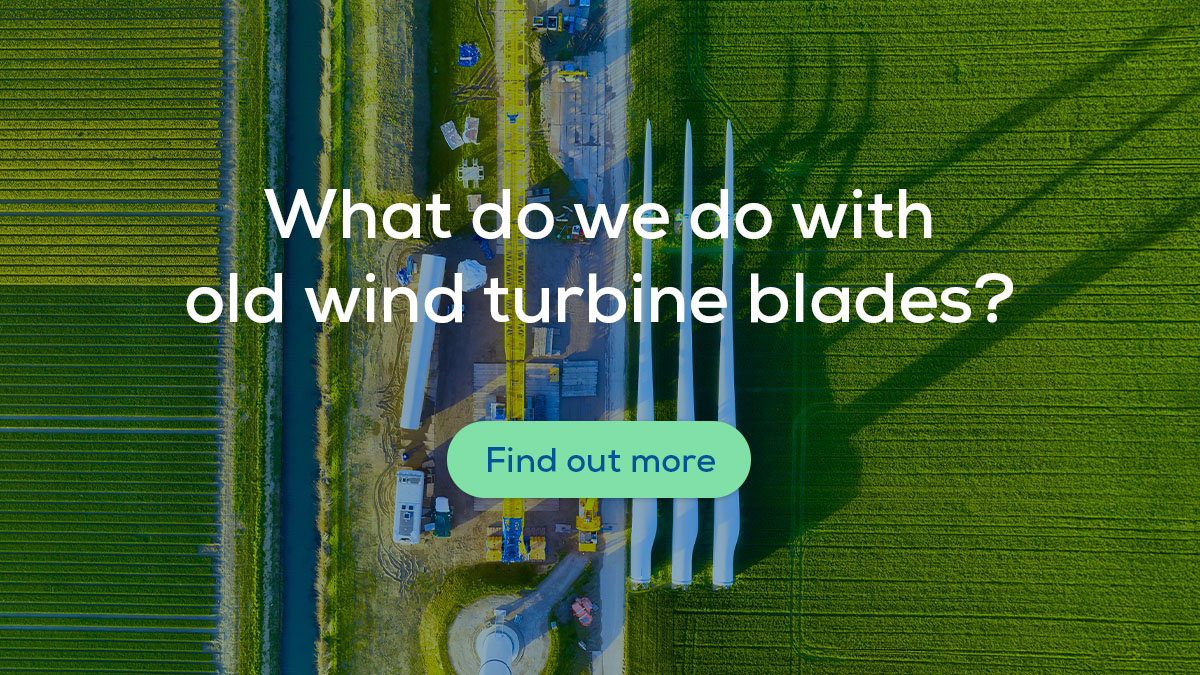
What do we do with old wind turbine blades?

What do we do with old wind turbine blades?

Sustainability has always been part of wind energy’s DNA. Our turbines have near-zero water consumption, minimal environmental footprint, and a short energy payback time.

Today, around 90% of a turbine’s mass is recyclable. But we need to go even further. We’ve committed to a Europe-wide landfill ban on decommissioned wind turbine blades – making sure they’re reused, repurposed, recycled, or recovered within Europe. And we’re not just talking about it – we’re making it happen.

The WE team has visited pioneering companies turning this vision into a reality:

The message is clear: turbine blades can have a sustainable end-of-life – and it’s happening today.

Take a look at our Circularity page on the WindEurope website. It’s a one-stop space looking at our industry’s progress. Get in touch with us here to share your stories too!

Find out more

Members’ Successes

Freeport of Riga

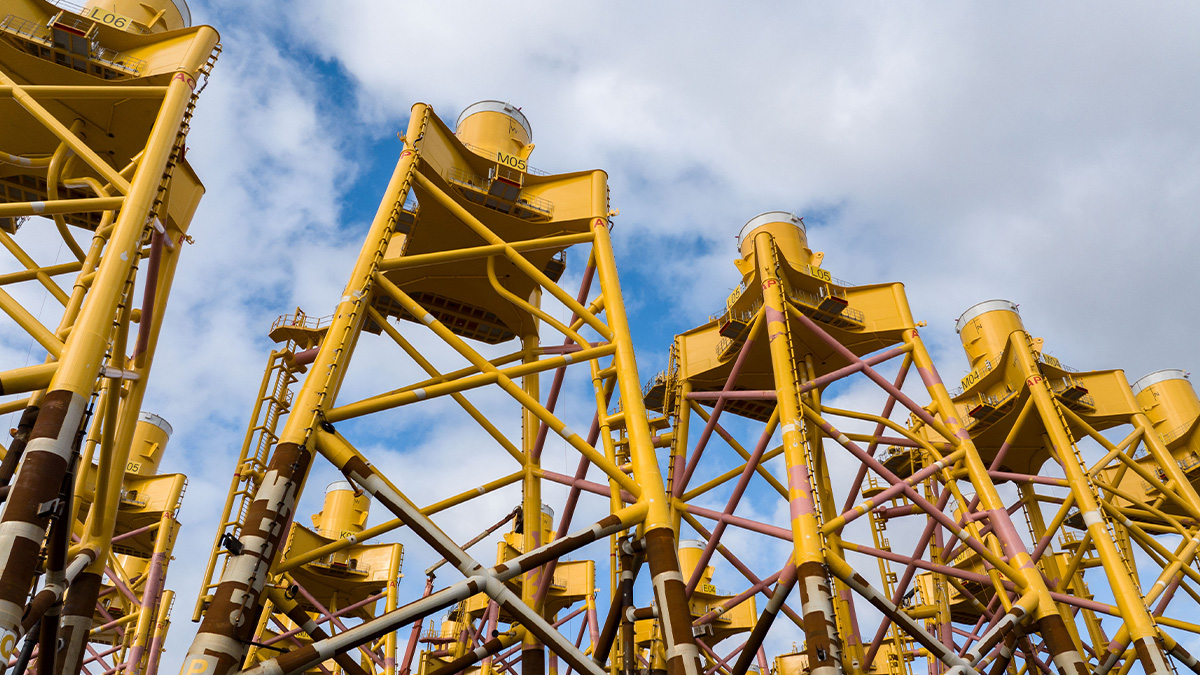
The strategic alliance between Navantia Seanergies and Windar Renovables has completed the construction of its 200th jacket for offshore wind in Fene (A Coruña).

This is a fixed foundation for a wind turbine for the Dieppe le Tréport offshore wind farm, promoted by LEMS, a joint venture where Ocean Winds is the majority partner. This milestone—the construction of 200 jackets—highlights an expertise built since the first offshore wind project of the alliance between Navantia and Windar: 29 jackets for Iberdrola’s German offshore wind farm Wikinger more than a decade ago.

Following this first contract, more agreements have come for jacket construction, including those for offshore farms like Moray East, Nissum Bredning, East Anglia One, St. Brieuc, as well as the current project under construction, Dieppe le Tréport, reaching a total of 200 units installed in offshore wind farms in Germany, Denmark, France, and the United Kingdom.

Another 80 units have been built in the United Kingdom, at facilities now part of Navantia UK, mainly for UK projects such as Ormond, Beatrice, and East Anglia One. Adding those manufactured in Spain and the UK, the total represents approximately half of the jackets installed in Europe, making this alliance the leading manufacturer of this product internationally.

Navantia Seanergies and Windar Renovables concentrate their industrial activity for these jackets at the Fene shipyard, which is consolidating itself as Europe’s reference point for offshore wind. Navantia Seanergies Fene shipyard is the only site able to carry out the construction of floaters, jackets, monopiles, and offshore electrical substations, contributing to the development of key technologies for the energy transition.

In the production of the jacket blocks, a welding robot—developed through an R&D&I project carried out at Navantia—has been used for all three kinds of pieces needed in the construction of the jackets. This technology has led to a reduction in welding time while improving the strength and lightness of the welds.

For the manufacturing of offshore wind components, Navantia Seanergies also has at its disposal several automated workshops, another technological investment that will deliver significant time and cost savings.

More about Navantia Seaenergies

More about Windar Renewables

Article: How standardisation can improve financing uncertainty in wind energy (3E)

As wind energy projects grow in scale and capital intensity, the robustness of energy yield assessments has become a critical concern for developers, lenders, and public authorities. Any deviation from actual performance can materially affect project financial viability.

General uncertainties on the end-result of energy yield assessments for example, lie within 8% to 14% depending on the project characteristics. While models improve over time, uncertainties remain significant.

An impact that is commonly underestimated however is the impact of the choice of the consultant and the applied methodologies on the end uncertainty, which is generally not something that is being quantified nor accounted for as usually considered embedded in the consultant’s own estimates.

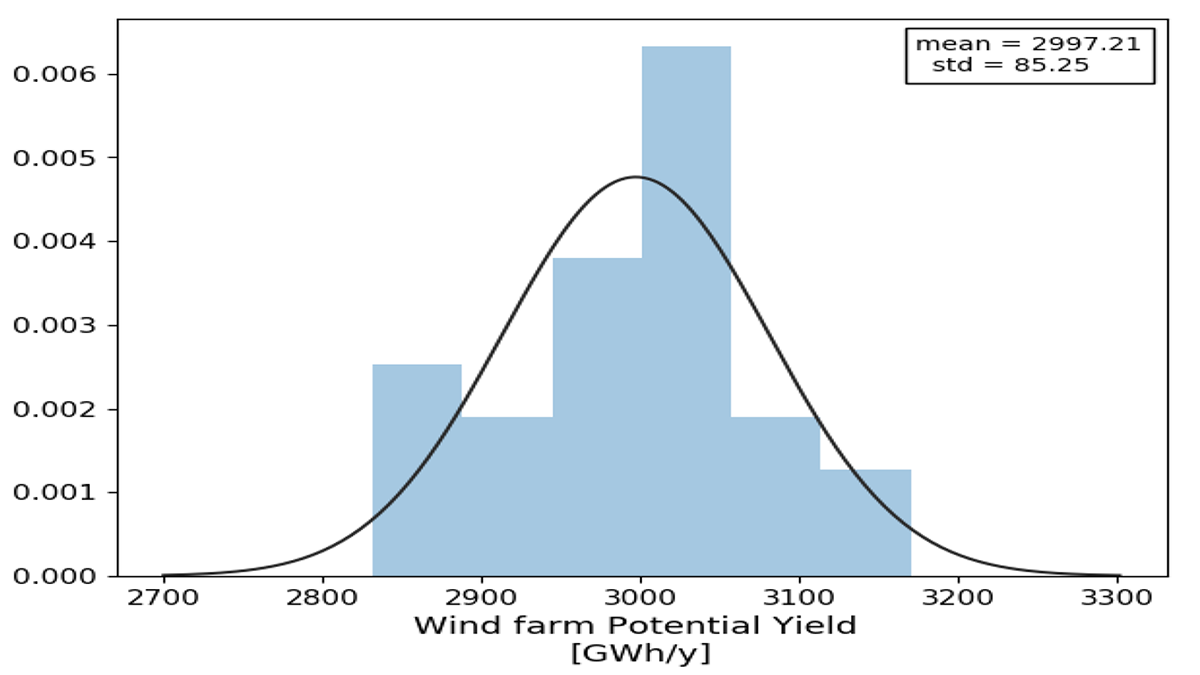
To evaluate the differences of energy yield assessments between industry members and thereby evaluate the uncertainty solely related to the choice of the resource expert, the Danish Technical University (DTU) organised a proficiency test. In total, 28 participants (consultants and project developers), including 3E, submitted production estimates for the Walney 3 & 4 offshore wind farm with a rated capacity of 659MW.
3E

The figure shows a clear spread across all submissions. While the standard deviation is relatively low (~3%), the gap between the most conservative and most optimistic results exceeds 10%, a range comparable to typical offshore energy yield uncertainty. This highlights the limitations of self-estimated uncertainty and the need for standardised, industry-proven methodologies.

To reduce uncertainty ranges, and to improve the consistency and comparability of results, the wind industry has established a suite of standards and methodological guidelines defining best practice for wind resource measurement and energy yield assessment. Prominent examples include the:

  • IEC 61400-50 series;
  • the MEASNET evaluation guidelines; and
  • Germany’s FGW TR6 (commonly referred to as TG6).

Complementing these technical standards is a facilitating quality framework: ISO/IEC 17025, the international standard specifying requirements for the competence, impartiality, and consistent operation of testing and calibration laboratories. While IEC, MEASNET, and FGW define what should be done from a technical perspective, ISO 17025 governs how organisations demonstrate that these activities are executed under controlled, traceable, and quality-assured conditions.

From a project finance standpoint, this institutionalised quality assurance is particularly valuable: lenders and investors seek confidence not only in the methods applied, but also in the rigor and governance of the processes behind them.

As a result, ISO 17025 accreditation, specifically when scoped to relevant wind measurement and energy yield assessment activities, is increasingly referenced in tender specifications, lender technical advisor requirements, and regulatory frameworks across multiple markets.

Standardisation helps minimise these risks by ensuring that technical results are reproducible, traceable, and comparable.

3E is an international renewable energy consultancy and software company delivering technical advisory and analytics services across the full wind project lifecycle. The company recently obtained ISO/IEC 17025 accreditation, underscoring its commitment to standardised methodologies, measurement traceability, and data integrity in wind resource assessment.

Acting as an independent expert across a broad portfolio of projects and markets, 3E is routinely exposed to the full spectrum of industry practice: from exemplary implementations to installations where seemingly minor deviations from best practice can materially affect data quality. Experience shows indeed that wind measurement data used for site appraisal can vary considerably in reliability and consistency, depending on how rigorously standards are applied in the field, increasing uncertainty and, ultimately, project risk.

The relevance of accredited approaches extends beyond Europe. 3E has contributed technical expertise to projects developed under South Africa’s Renewable Energy Independent Power Producer Procurement Programme (REIPPPP), and the IFC’s Scaling Wind [2] and ESMAP programs where consistent application of standards and guidelines has been essential to support transparent project evaluation and attract international financing.

References:

[1] Jake Badger, Dalibor Cavar, Morten Nielsen, Niels G. Mortensen, Brian O. Hansen (DTU Wind Energy), 15/09/2021, CREYAP 2021

[2] International Finance Corporation. (n.d.). Scaling Wind. World Bank Group.
More about 3E

Member Interview: Simply Blue

This month, we spoke with Hugh Kelly, CEO & Co-Founder of Simply Blue GRoup, to talk about their offshore wind portfolio, the prospects for commercial-scale floating wind and the need to tackle populism and misinformation.

Read interview

Webinars

WindEurope Work Programme 2026 (with new CEO – Tinne Van der Straeten)

WindEurope is pleased to invite its members to a dedicated webinar presenting the 2026 Work Programme, the Association’s blueprint outlining key priorities and planned activities for the year ahead.

The session will be led by Tinne Van der Straeten, our new CEO. During the webinar, members will receive an overview of strategic focus areas for 2026 and gain insight into how WindEurope will support the sector in the coming year.

Participants will also have the opportunity to ask questions, share feedback, and engage directly with WindEurope colleagues involved in developing and delivering the programme.

Register here

Events

WindEurope’s Annual Event – Meet the wind industry in Madrid this April!

16,000+ people are coming to the Spanish capital from 21-23 April to look at the challenges and opportunities facing our industry – and what wind means in 2026:

  • The energy of security: It’s homegrown, and cuts our dependence on unreliable suppliers.
  • The energy of competitiveness: It will be at the core of the cheapest energy system for Europe.
  • The energy of prosperity: It creates jobs & investment and brings down energy bills.

In short, it’s the energy of Europe.

Across 80+ sessions with 400+ speakers we’ll be shedding light on these themes, and what more we can do to build out wind and deliver a competitive, future-proof energy system. See the full programme here.

Together with 500+ exhibitors, 400+ posters & e-posters, and dozens of social and side events, this promises to be buzzing three-day get-together for the European wind industry. We hope you can join us too – register now and see you there!

Register now

New Podcast – The Onshore Perspective

Looking for clear insights on Europe’s onshore wind market? Then make sure to tune into The Onshore Perspective – our new podcast with industry experts looking at offshore wind trends, policy developments, and prospects for future growth.

Click here to see last month’s episode on Germany – and stay tuned for our next episode on Sweden next week!

Listen to the podcast