News
Offshore Wind in the Mediterranean: New Study Sets Out Priorities for Growth
14 July 2026
A joint study by Politecnico di Torino and WindEurope identifies what the Mediterranean needs to grow its offshore wind sector. Published in Renewable and Sustainable Energy Reviews, the study finds that clear rules, strong infrastructure and grid readiness matter as much as technology. The goal is to turn the region’s wind potential into real, competitive projects, in line with Europe’s energy transition goals.
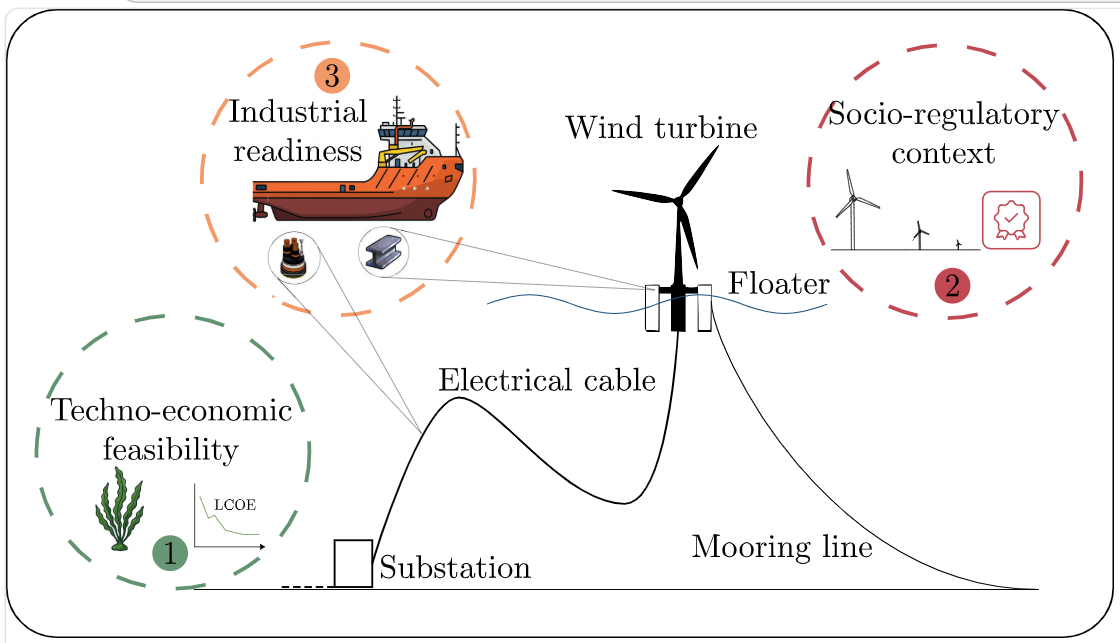
Politecnico di Torino’s MOREnergy Lab and WindEurope have studied how to speed up offshore wind development in the Mediterranean. The study “Potentials and challenges of floating wind in the Mediterranean Sea: a joint industrial and academic perspective” sets out what is needed to turn offshore wind potential into viable and profitable projects. It aims to give policymakers and companies solid evidence to strengthen the competitiveness of offshore wind in Europe.
Clear rules matter as much as technology. The study finds that stable, predictable regulation — on permits, auctions and grid access — is just as critical as technical maturity. Predictable timelines and tools that reduce risk are essential to attract investment.
Infrastructure and supply chains need to scale up. Ports, production capacity, logistics and skilled workers are all needed to build offshore wind plants at industrial scale.
Grid connection is a major factor. Offshore wind farms need efficient links to the mainland grid. The availability and capacity of these connections directly shape project costs, timelines and viability.
Environmental and social factors are also fundamental. The study stresses the need for environmental safeguards, ongoing monitoring, and early dialogue with local communities.
The underliying aim of this research is to align public policy, industry decisions and technical priorities, to support credible, achievable growth of offshore wind in a region that is strategic for Europe’s energy security and competitiveness.
Giuliana Mattiazzo, Professor at Politecnico di Torino’s Department of Mechanical and Aerospace Engineering (DIMEAS) and co-author of the study, said: “The development of floating offshore wind power in the Mediterranean is both an industrial and a strategic challenge. This study confirms that technology alone is not enough. We also need the right conditions: planning, clear regulation, port infrastructure, expertise, and an industrial supply chain that can grow with the projects. Our collaboration with WindEurope, and our dialogue with industry, show how university research can bring together scientific analysis, industrial vision and strategic decision-making. For Politecnico di Torino, MOREnergy Lab and the Energy Center, offshore wind is a strategic area for building the knowledge and tools that will strengthen the Italian and European energy and industrial systems.”
WindEurope Deputy CEO Malgosia Bartosik said: “Floating offshore wind can unlock much of the Mediterranean’s offshore renewable energy potential. This analysis shows that technology is only part of the answer. Predictable regulation, coordinated grid planning, the right port infrastructure, and a ready supply chain are all essential to make projects credible, bankable and deliverable. WindEurope is glad to have worked with Politecnico di Torino on this study. It gives us solid evidence to guide the next phase of offshore wind development in the Mediterranean.”