News
Global Wind Day 2026: Our wind, our communities
15 June 2026
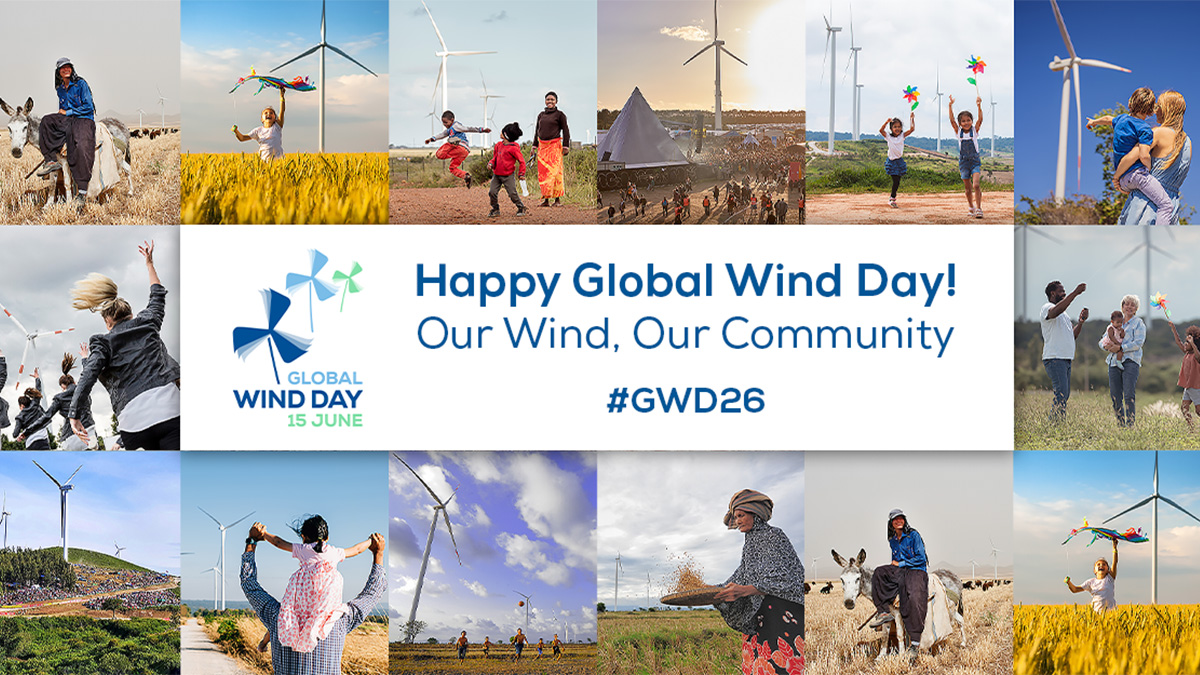
Wind energy works best when communities are part of it. Across Europe, they are. They benefit from robust participation models, local taxes and other benefit-sharing schemes. On Global Wind Day, WindEurope celebrates the local partnerships powering Europe’s energy transition – and calls on policymakers to protect the participation models that underpin them.
Most European countries have mandatory or strongly incentivised benefit-sharing frameworks in place. These frameworks take many forms: from lower electricity bills to benefit funds and co-ownership models. Citizens are informed early, consulted and enabled to shape projects.
Take Celada Fusión in rural Spain – a region that had been losing residents for decades. Since a wind farm was built there, the town has attracted new inhabitants, built a swimming pool, a paddle tennis court, and introduced a taxi service for its elderly population – all funded from wind revenues.
Or Andilly Les Marais in France – this year’s winner of the Fast and Fair Renewables Award – where 380 local residents invested €1.2 million to co-own a third of the local wind farm. The project reinvests €62,000 every year into local education and infrastructure.
These aren’t exceptions. There are thousands of projects like this across Europe. For this year’s Global Wind Day, WindEurope collects them on the “Our wind, our community” page.
WindEurope CEO Tinne Van der Straeten said: “Communities across Europe benefit from wind energy projects through community funds, shared ownership, infrastructure investments and renewed public spaces. These participation models work. Let’s not overregulate them! There is no one-size-fits-all solution. Wind farm developers must be encouraged to understand local needs and provide solutions that are tailored to the local context. This flexibility delivers better outcomes than overly rigid or complex rules.”
Draft EU rules would undermine existing participation models
New EU-level proposals risk going in the wrong direction. They are overly prescriptive and duplicate national participation frameworks. They would not leave enough room for local solutions. And they could increase costs, which would undermine project viability and delay the energy transition.
“Europe needs more homegrown wind energy to strengthen its energy security and competitiveness. If participation rules become too rigid, they risk slowing down wind projects – with negative results for Europe’s economy and its local communities”, says Tinne van der Straeten.
Wind is often the largest contributor to local budgets
Wind energy delivers direct financial value. The sector already pays €2.3bn annually in local taxes. Especially in rural areas, wind is often one of the largest contributors to municipal budgets. A typical onshore wind farm can generate thousands of euros annually for public services such as schools, roads and healthcare.