
News
Wind energy dis- and misinformation undermine Europe’s security and competitiveness
21 April 2026
Wind energy dis- and misinformation have evolved into a systemic risk to Europe’s security, competitiveness and ability to act. Today CASM Technology and WindEurope presented a first-of-its kind report which analyses the scale of wind energy dis- and misinformation across Europe. It illustrates how false narratives circulating on social media lead to real-life wind energy project delays and cancellations – just when Europe urgently needs more home-grown, affordable electricity.
The crisis is yet another reminder that home-grown renewables are the only future-proof energy strategy for Europe. The European Union wants to electrify with homegrown renewables. The European public overwhelmingly supports the transition to renewables. And with the Madrid Call to Action, the wind industry today presents 10 actions to make Europe more energy independent.
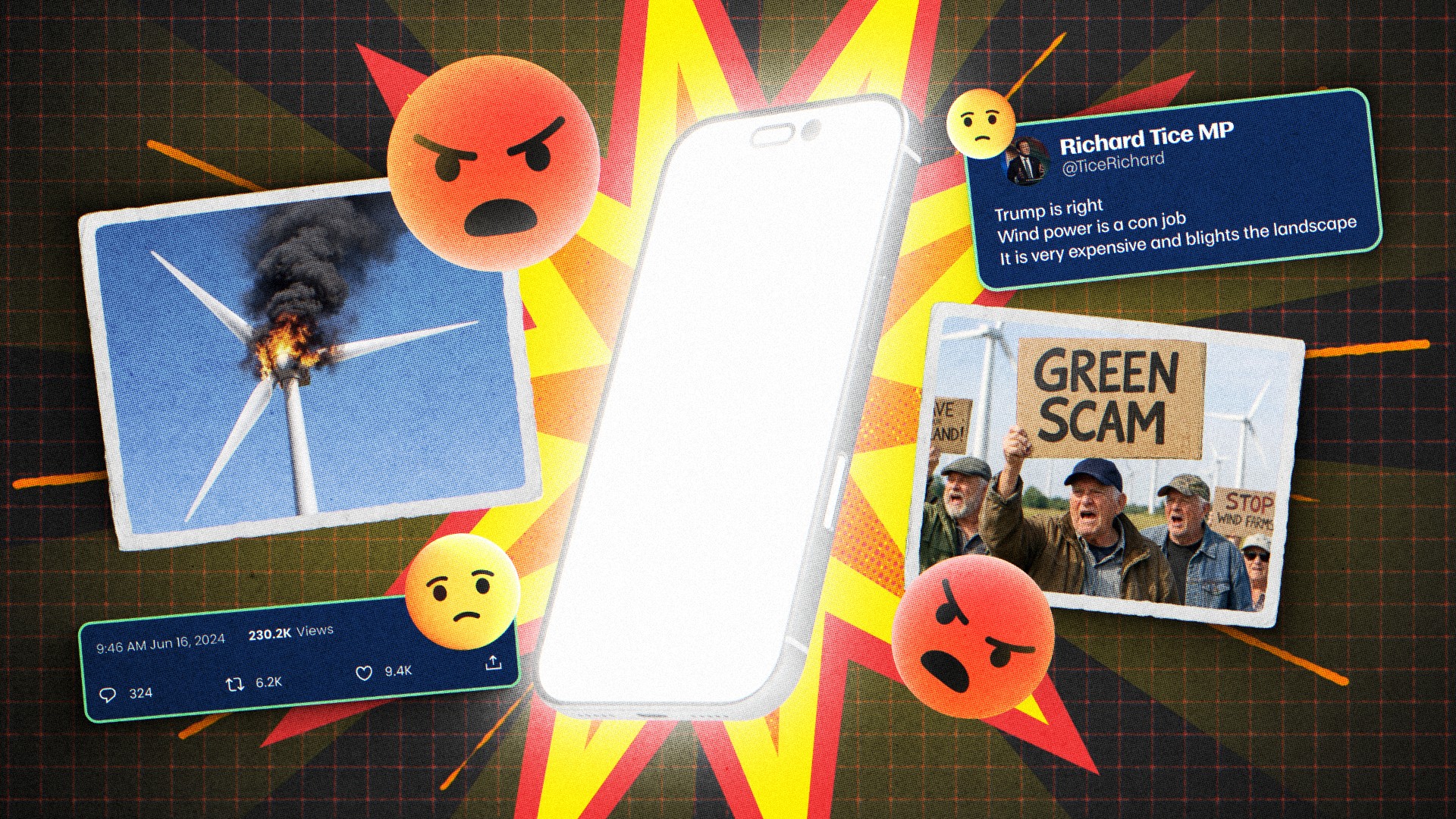
But across social media, anti-wind actors spread recurring myths on alleged health, environmental and economic impacts of wind energy, reaching millions of Europeans. This poses a serious risk to the buildout of wind energy and Europe’s wider energy security.
Dan Jørgensen, European Commissioner for Energy and Housing, says: “At a time when Europe is once again confronted with a fossil energy crisis, my message is unmistakable: wind power is not only a climate solution—it is an economic advantage and a pillar of our security. We cannot allow disinformation to delay or derail the expansion of renewable energy at the very moment we need to accelerate it to lower costs for our consumers and to strengthen our resilience. The Commission takes this issue very seriously and is actively working, including through targeted information campaigns, to counter false narratives about wind and clean energy. Europe needs a public debate grounded in facts, not fiction”.
Tinne van der Straeten, WindEurope CEO, says: “Wind energy dis- and misinformation are much more than a social media phenomenon. Across Europe, wind energy projects worth billions of Euros have been halted or cancelled, often following protests and campaigns underpinned by dis- and
misinformation claims. The results are alarming: a slower transition to home-grown renewables and higher electricity prices for European consumers.”
New report on dis- and misinformation: reach, actors and narratives
Together with the UK-based think tank CASM Technology, WindEurope has analysed anti-wind posts across different social media platforms to understand the scope and the nature of the problem.
Carl Miller, Founder of CASM Technology, says: “A large and well organised ecosystem of actors is actively undermining Europe’s energy discourse. It is made up of professionalised anti-wind groups, activists, media outlets and predominantly right-wing politicians. Over the research period of one and a half years, this network produced more than 40,000 posts, generating 6,3 million active engagements and generating tens of millions of views.”
The report details the most active actors in the network as well as the dis- and misinformation narratives most commonly used to discredit wind energy. It contains various case studies to illustrate the spillover effects from false claims on social media to the real-life impacts on actual wind energy projects. These range from project delays and cancellations to violent attacks on wind farms.
But dis- and misinformation not only a social media issue. False claims around wind energy have moved out of online echo chambers and into wider public debate. They are frequently featured in mainstream media reporting, as the NGOs QuotaClimat, Science Feedback, and Data for Good have shown for the cases of France as well as Spain, Poland, France and Brazil.
Eva Morel, Secretary General at QuotaClimat, says: “Climate mis- and disinformation is now permeating mainstream media, leading to a worrying normalisation of these narratives. In our study, we detected 815 cases across four countries, nearly 50% of which directly discredit renewable energy: it has become the focal point of climate disinformation strategies.”
Governments must not take this issue lightly. There’s a lot at stake: failing to deliver a renewables based energy systems with high shares of wind energy would cost Europe up to €1.6 trillion by 2050.