






Published on 08 December 2025
Overview
Europe is just 25 years away from its net-zero climate goal. The road to 2050 is not a single route but a set of possible routes — each shaped by different technologies, costs and societal choices. Across the continent, Governments are testing options to make the transition affordable and cost-effective.
What will ultimately decide the pace and shape of this transition are the total energy system costs. These are the investments we need to build and operate new electricity generation, hydrogen production, and their transport and storage networks. They also include the costs that societies will pay to shift to electricity and hydrogen demand, capture remaining emissions, and meet residual oil and gas needs.
This study looks at four pathways that can lead to a net-zero 2050 and a fifth one where Europe fails to reach its energy and climate targets. Renewables are already Europe’s cheapest source of electricity. The study shows that a renewables-based energy system, factoring in the cost of grids, storage and backup, is by far the most affordable way to power Europe in the years ahead. This pathway also delivers the greatest energy security minimising Europe’s dependence on imported energy fuels.
What will ultimately decide the pace and shape of this transition are the total energy system costs. These are the investments we need to build and operate new electricity generation, hydrogen production, and their transport and storage networks. They also include the costs that societies will pay to shift to electricity and hydrogen demand, capture remaining emissions, and meet residual oil and gas needs.
This study looks at four pathways that can lead to a net-zero 2050 and a fifth one where Europe fails to reach its energy and climate targets. Renewables are already Europe’s cheapest source of electricity. The study shows that a renewables-based energy system, factoring in the cost of grids, storage and backup, is by far the most affordable way to power Europe in the years ahead. This pathway also delivers the greatest energy security minimising Europe’s dependence on imported energy fuels.
Findings
1
Total energy system costs in Europe by 2050 across all scenarios

2
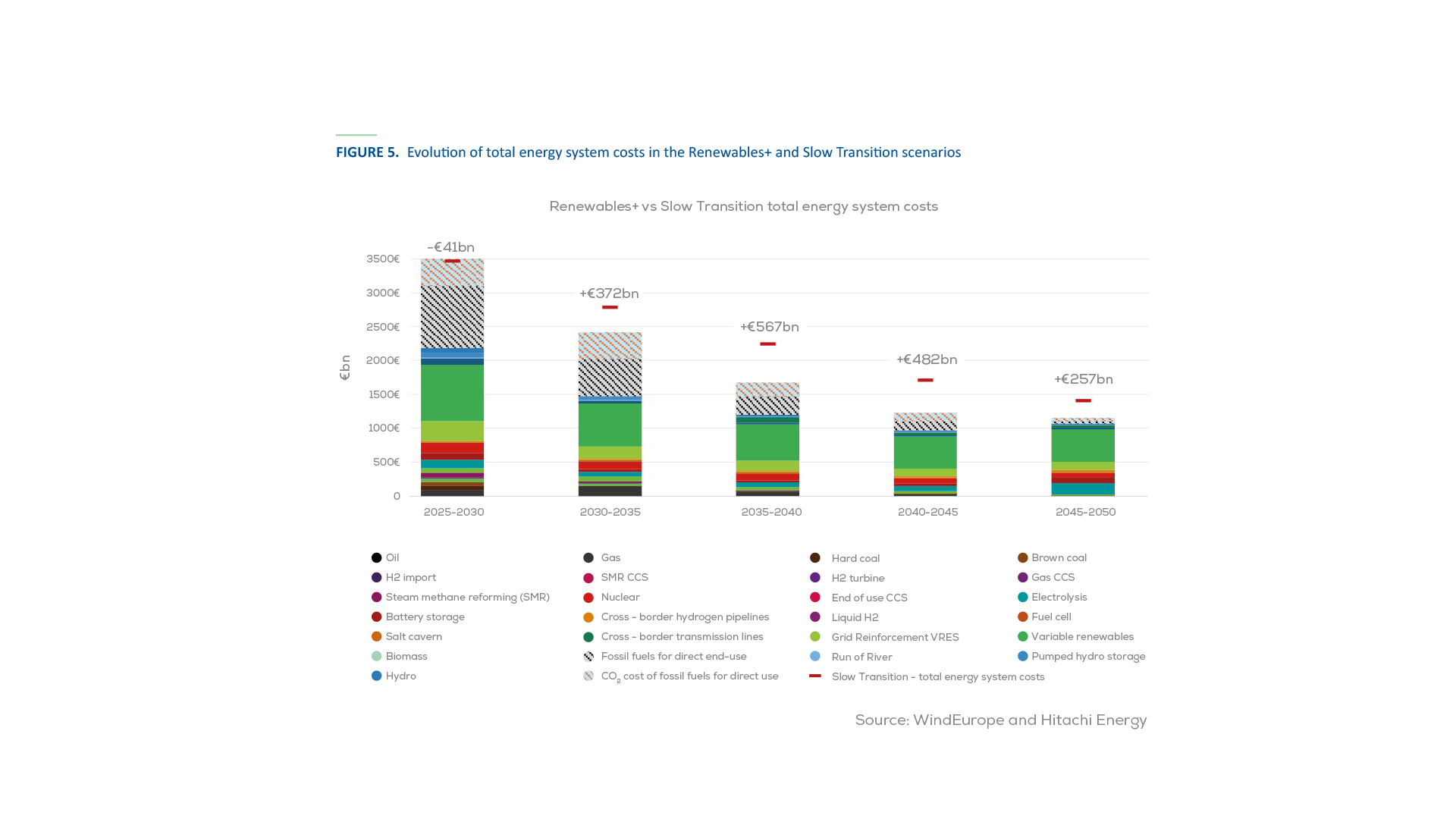
Evolution of total energy system costs in the Renewables+ and Slow Transition scenarios
3
Total installed capacity in Europe by 2050 in all scenarios

4
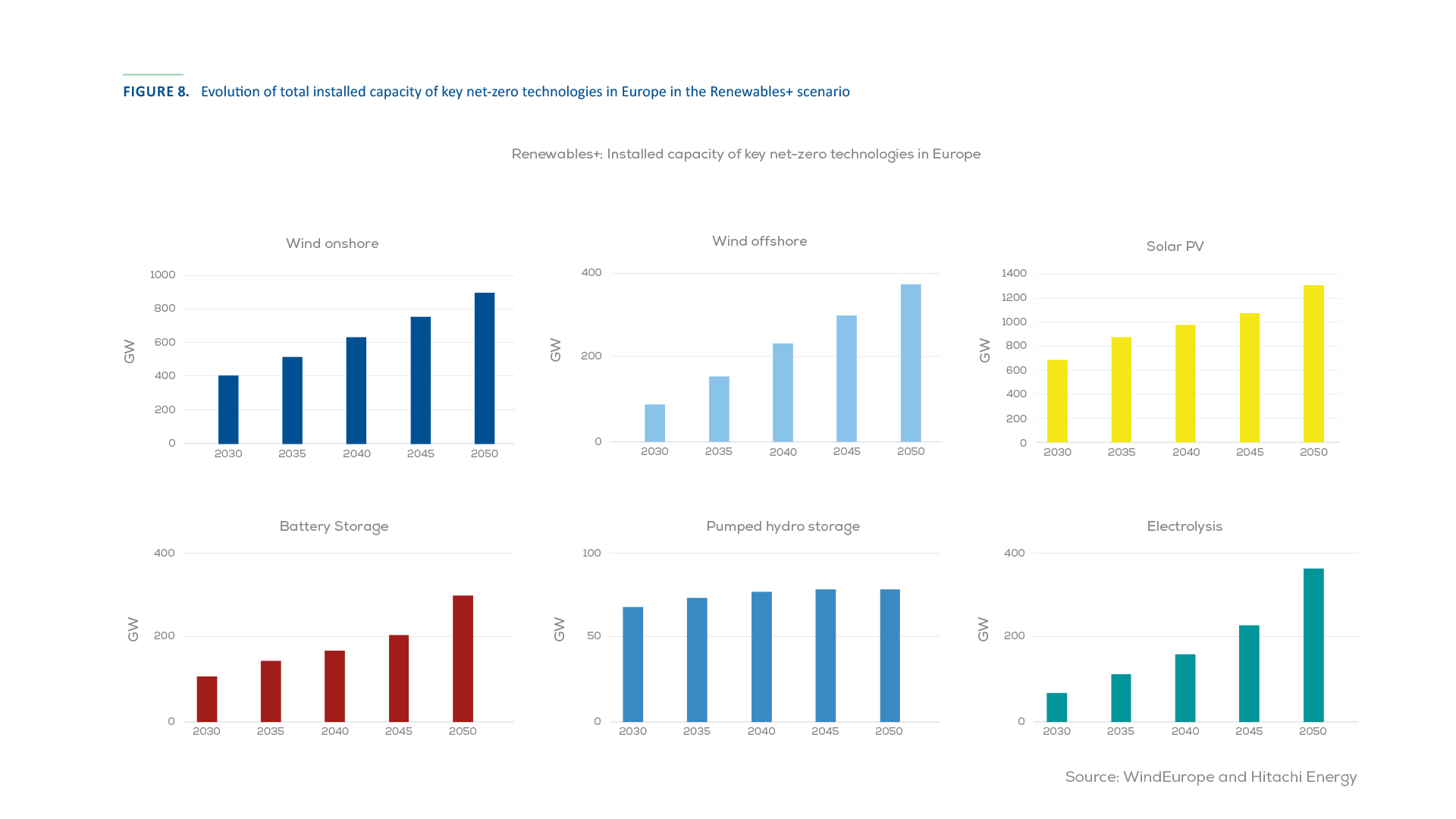
Evolution of total installed capacity of key net-zero technologies in Europe in the Renewables+ scenario
5
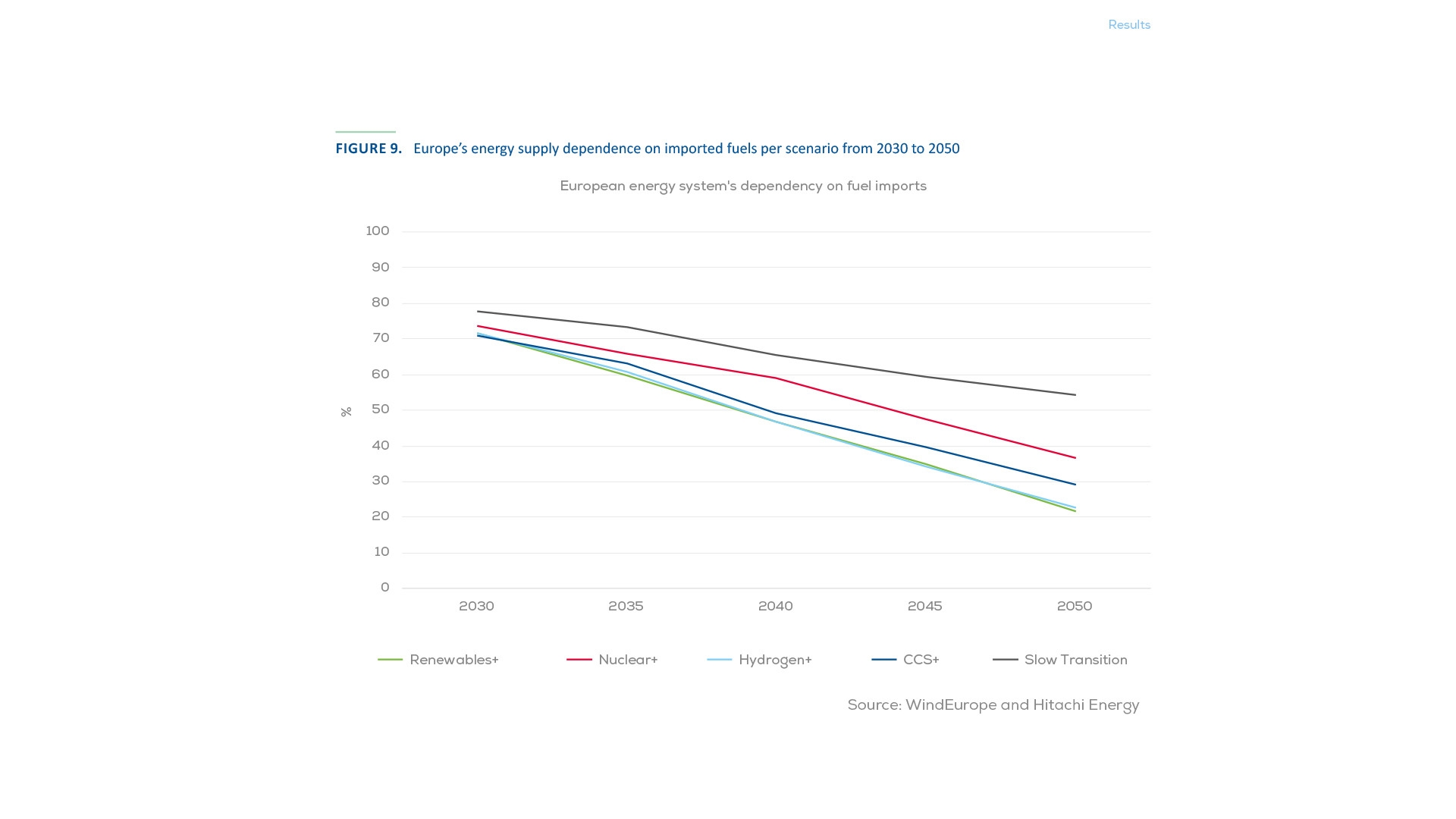
Europe’s energy supply dependence on imported fuels per scenario from 2030 to 2050
6
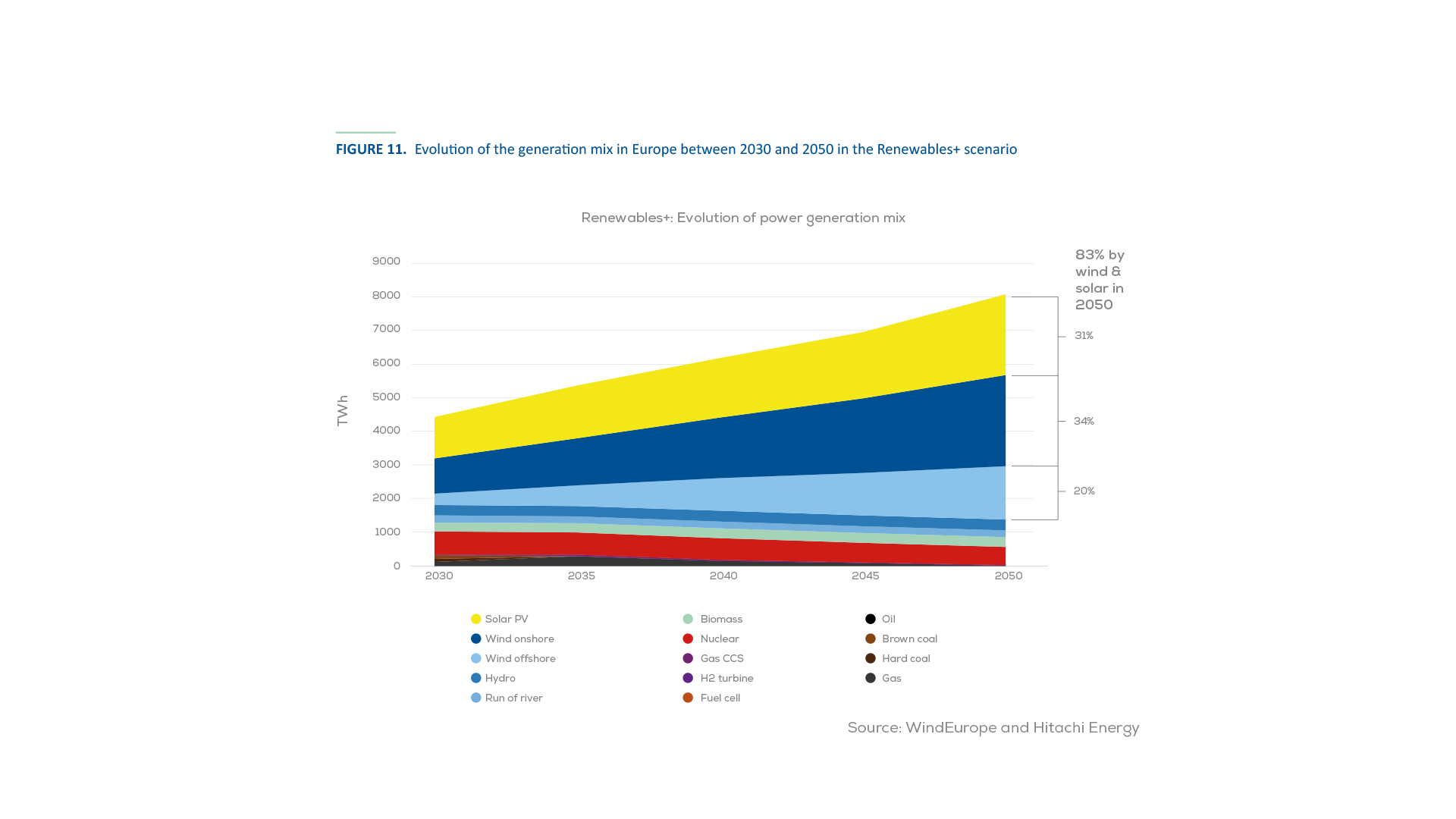
Evolution of the generation mix in Europe between 2030 and 2050 in the Renewables+ scenario
Download technical report
National data
Please log in to see this section.
Please log in to see this section.